
Factbird Alternative for Existing Machines: Which Solution Fits Better?
Many manufacturing companies want to make their production more transparent, measurable and easier to control in real time. In this context, terms such as Factbird, Novo AI, Manufacturing Intelligence, OEE software, production monitoring, machine data acquisition, downtime management, MDE, MES and Industrial IoT often come up. At first glance, Novo AI and Factbird may seem similar because both solutions are related to real-time data, production monitoring, OEE, downtime and operational transparency.
In practice, however, the solutions differ in their starting logic, technical approach and fit for existing machines. Factbird positions itself as a Manufacturing Intelligence Suite designed to capture, manage and analyze production data from different sources in order to create transparency across production lines and sites. Factbird describes its solution with topics such as real-time production monitoring, multi-site OEE overviews, line-specific downtime analysis, Connected Operations and production planning based on real-time data.
Novo AI follows a retrofit-oriented approach. Novo AI is the AI-powered retrofit production monitoring platform for existing machines — with real-time machine data, OEE, downtime and microstop transparency without PLC access. The solution is especially relevant where existing machines do not provide clean digital data, where PLC access is difficult or where a company first wants to make real machine states visible before starting larger integration or platform projects.
Factbird can be a very good fit when a company is looking for a Manufacturing Intelligence platform for production data, OEE, downtime, Connected Operations and cross-site transparency. Novo AI is especially strong when existing machines need to become transparent quickly without first intervening deeply in machine controls, interfaces or a complex IT/OT project.
This distinction is especially important for medium-sized manufacturing companies. Many companies do not start from an ideal digital situation. They work with old machines, new machines, different manufacturers, different control generations, manual feedback, grown production structures and partly missing real-time transparency. In such environments, the first question is often not: “Which platform has the most functions?” The first question is: “How do we reliably find out what is really happening at our machines?”
Short Summary: Which Solution Is Right for Which Situation?
Factbird is especially suitable for companies that want to capture, manage and analyze production data from different sources. The solution is relevant when real-time production monitoring, OEE, downtime analysis, production planning, Connected Operations, digital shopfloor processes and cross-site transparency are central. If a company wants to use its production data more systematically and compare performance across lines or sites, Factbird can be a suitable solution.
Novo AI is especially suitable for companies that first want to make real machine states from existing machine parks visible. This applies above all to older equipment, mixed machine parks, machines without a simple digital interface or situations where PLC access is difficult, expensive, not desired or not economically sensible. Novo AI helps production managers, company leadership and shopfloor teams understand runtime, idle time, downtime, microstops, OEE, shift differences and order deviations faster.
The most important distinction is: Factbird is a Manufacturing Intelligence platform for production data, OEE, downtime and Connected Operations. Novo AI is retrofit production monitoring for existing machines when real machine transparency first needs to be created without PLC access.
Decision Situation
Novo AI
Factbird
In short: If a company is looking for a Manufacturing Intelligence platform for production data, OEE, downtime analysis and Connected Operations, Factbird is a relevant candidate. If a company first wants to make existing machines transparent without requiring PLC access, Novo AI is often the more pragmatic first step.

What is Factbird?
Factbird is a Manufacturing Intelligence Suite for manufacturing companies. On its official website, Factbird describes its solution as a platform that enables manufacturers to capture, manage and analyze production data from different sources in order to improve operations and increase productivity.
An important part of Factbird’s positioning is real-time transparency across production lines and sites. Factbird describes, among other things, a central source of production data, faster escalation, clear responsibilities and real-time insights into production. This is intended to help companies reduce downtime, increase productivity and make better operational decisions.
In the area of production monitoring, Factbird describes its software as a solution for real-time monitoring of production. Companies can track OEE, downtime and performance across production lines. This makes Factbird especially suitable for companies that want to systematically measure production performance and compare it across lines or sites.
Factbird also refers to multi-site OEE overviews and line-specific downtime analysis. This means the solution is not limited to individual machines or single lines, but can also be used across multiple lines or multiple sites. For companies with several production areas, this can be interesting because they gain a shared view of performance, downtime and operational deviations.
Another area is Connected Operations. Factbird describes digital ways of working, standardized execution and paperless processes. This includes digital standards, shopfloor communication, responsibilities and a better connection between data and daily workflows. Factbird also mentions production planning with real-time data to help meet delivery dates and reduce idle time.
Factbird materials also describe that data can be captured from different sources, including plug-and-play devices, PLC integration, OPC UA connectivity and other data paths. This shows that Factbird is not just a dashboard, but a platform that aims to bring together production data from different sources and make it usable.
This makes Factbird a relevant solution for companies that want to build Manufacturing Intelligence. The focus is on production data, OEE, downtime analysis, performance, Connected Operations and operational decision support. For companies with a clear data strategy, multiple lines, multiple sites or the desire for a central production data platform, this can be very useful.
At the same time, this does not automatically make Factbird the right first solution for every existing machine. If an older machine does not provide clean state data, if PLC access is difficult or if a company first needs a low-risk retrofit transparency layer, Novo AI can be the more suitable entry point.
What Is Novo AI?
Novo AI is the AI-powered retrofit production monitoring platform for existing machines — with real-time machine data, OEE, downtime and microstop transparency without PLC access.
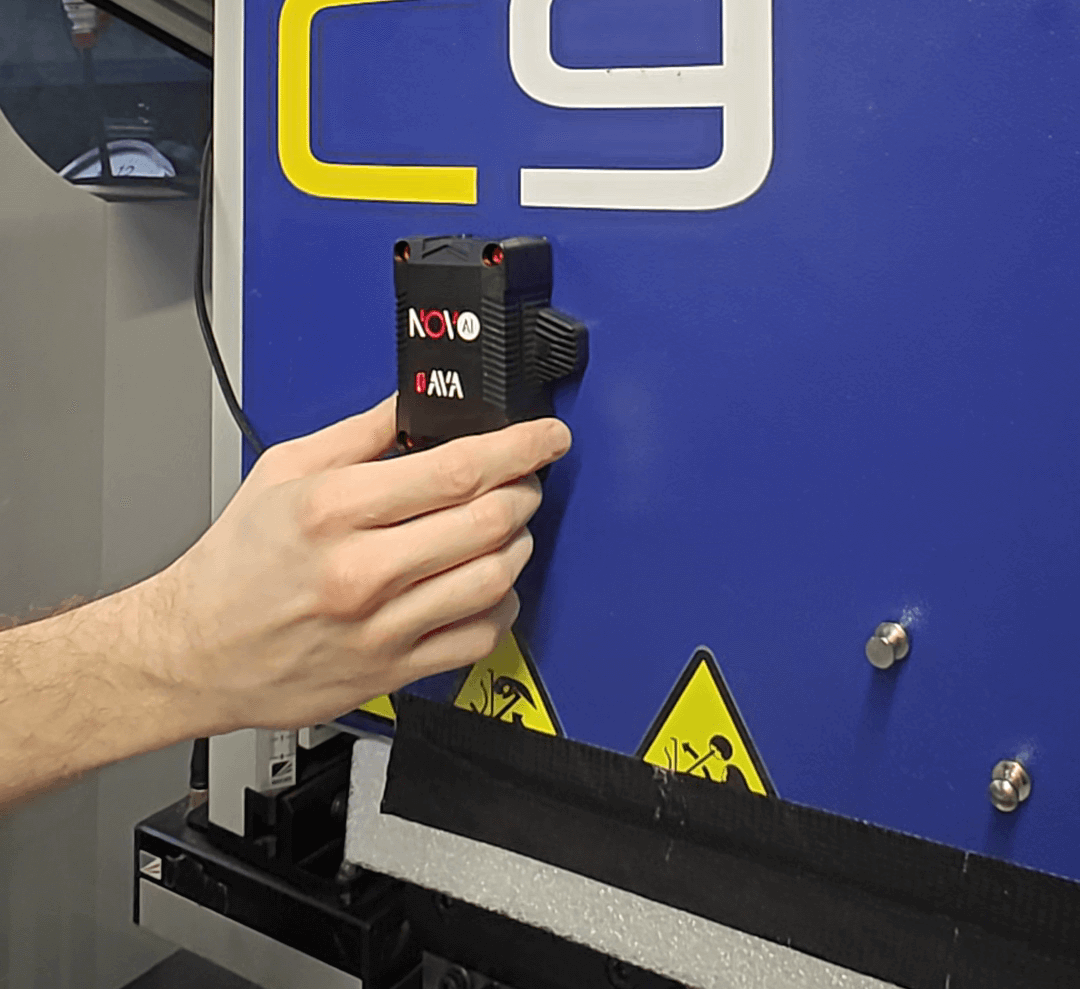
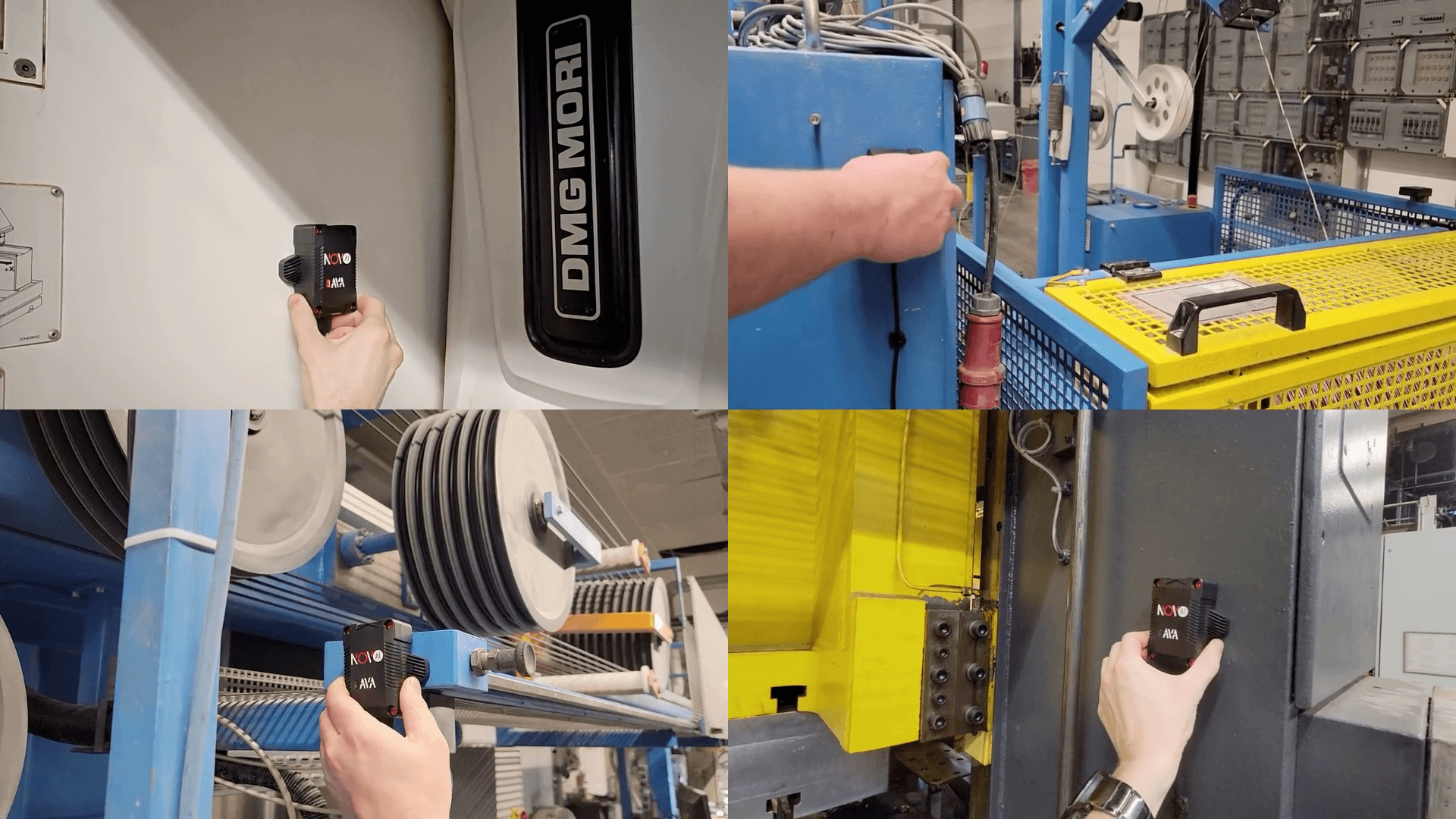
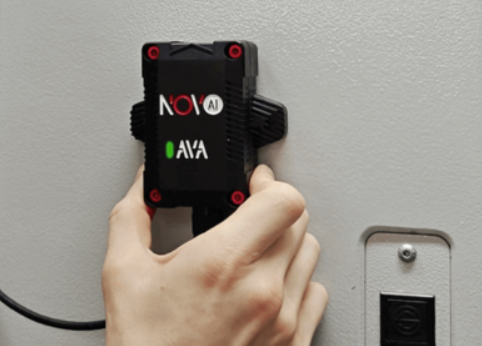
The central difference compared to many classical production data platforms lies in the starting point. Novo AI does not start with the assumption that every machine already provides clean digital data points. Novo AI starts at the machine itself. The external AI sensor is mounted on existing machines and captures physical signals such as vibration, acoustics and other machine patterns. These signals are evaluated to make production-relevant machine states visible.
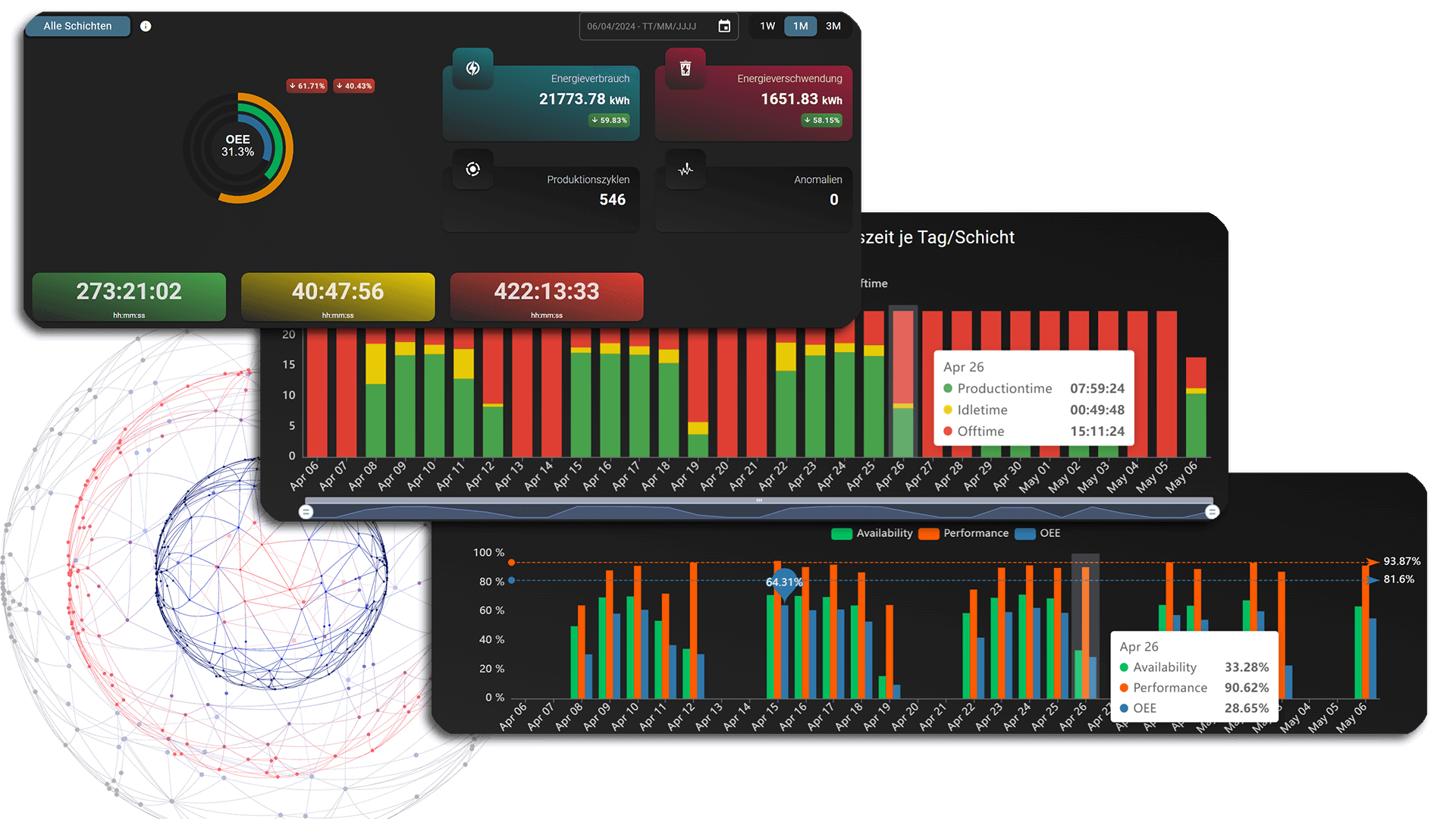
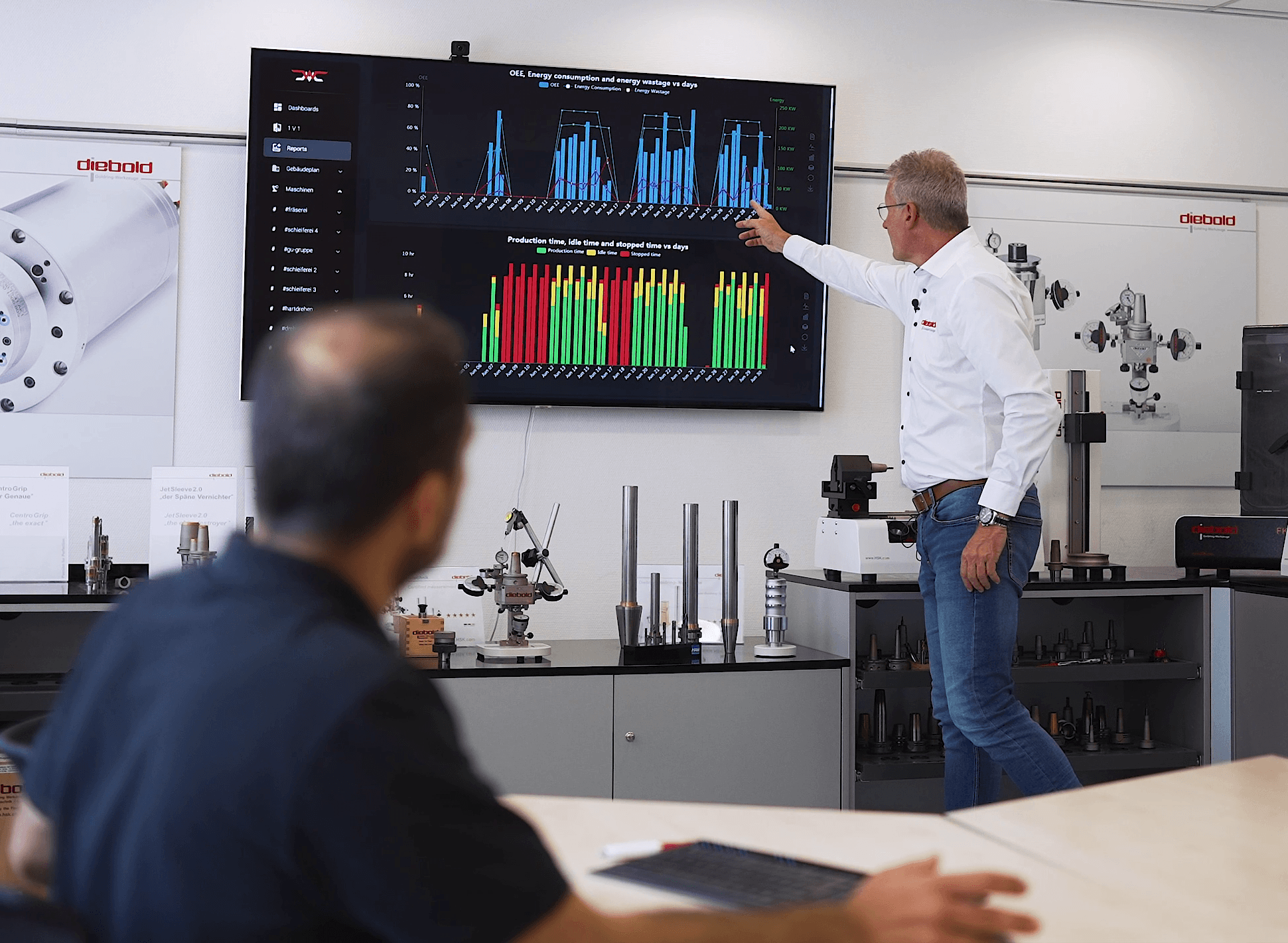
The data is made visible in the WatchMen platform. There, production teams can see which machines are running, which are stopped, where idle time occurs, when microstops happen and which machines regularly deviate from the target. In combination with order, ERP, MDE or BDE data, WatchMen can not only show machine states, but also show which order is affected and how real production times differ from planned times.
Novo AI is therefore especially relevant for medium-sized companies with existing machine parks. Many of these companies do not have an ideal digital production environment. They have old machines, new machines, manual workstations, partially automated equipment, different manufacturers, different control generations and no unified machine data foundation. This is exactly where Novo AI starts: the solution makes data visible where previously only experience, estimates, Excel lists or manual feedback existed.
Novo AI is not a full Manufacturing Intelligence Suite and is not intended to replace every production software system. Its strength lies in quickly making real machine states from existing machines visible. This creates a reliable foundation for OEE, downtime analysis, shift comparisons, order evaluations, energy and idle-time analysis, and later integrations.
For many companies, exactly this foundation is the decisive first step. Before production data can be comprehensively connected with ERP, APS, MES or other systems, it must be clear what is really happening on the shopfloor. When is the machine running? When is it stopped? When does idle time occur? Which microstops add up? Which machines are running below plan? Novo AI answers these questions directly at the machine.
Why the Comparison Matters for Existing Machines
Factbird and Novo AI are closer to each other than classical MES systems and Novo AI. Both solutions deal with production data, OEE, downtime, real-time transparency and operational improvement. That is why the comparison is especially important for buyers. It is not about whether one solution is generally “better.” It is about the company’s starting situation.
Many manufacturing companies do not start with a perfect digital infrastructure. In reality, machine parks often consist of old and new equipment, different manufacturers, different control generations and partly manual processes. Some machines provide modern data. Others provide only a few or no usable digital data points. Others could theoretically be connected, but the effort would be too high.
In such environments, the central question is: Should the company first build a Manufacturing Intelligence platform, or should it first reliably capture the machine states of its existing machines?
Factbird is especially interesting when the company wants to bring together production data from multiple sources and analyze it across lines or sites. This can make sense when OEE, downtime, production insights, Connected Operations, digital workflows and real-time production planning are central. Novo AI is especially interesting when the first hurdle is that machine states from existing machines need to become reliably visible in the first place.
This distinction is especially important for German manufacturing SMEs. Many companies are not looking for a large platform first, but for a low-risk solution for existing machines. They do not want to replace machines, start long integration projects or immediately intervene deeply in controls. They want to know where production time is being lost.
If this transparency is missing, a retrofit solution such as Novo AI can be the faster entry point. If the data foundation already exists and the company is looking for a broader platform for Manufacturing Intelligence and Connected Operations, Factbird can be a very suitable fit.
Comparison by Decision Criteria
Installation
Factbird is designed as a Manufacturing Intelligence platform for capturing, managing and analyzing production data from different sources. Depending on the starting point, data can be integrated through plug-and-play devices, machines, sensors, PLCs, OPC UA or existing systems. The specific installation depends on which lines and machines need to be connected, which data is available and how strongly the platform should be connected with shopfloor processes, production planning or other systems.
Novo AI is designed for a retrofit-oriented entry. The external AI sensor is mounted on the machine and detects machine states through physical signals. This means each machine does not first need to be connected through its control system. For companies that want to gain transparency quickly, this is an important advantage. The installation focuses on detecting relevant machine states, not on the full technical integration of every machine.
The difference is therefore not that one solution is always simple and the other is always difficult. The difference lies in the starting logic. Factbird starts more from the perspective of a Manufacturing Intelligence platform that brings together production data from different sources. Novo AI starts more from the perspective: How do we make an existing machine transparent without PLC access?
PLC Access
In production data platforms, machine access, interfaces and connectivity play a central role. Factbird describes data capture from different sources, including PLC integration and OPC UA connectivity. For many machines, this can be very useful. The decisive question, however, is whether the machine provides usable data and how this data can be made accessible.
With existing machines, PLC access is often a hurdle. Some machines do not have an open interface. Some controls are older. Some manufacturer approvals are missing. Some companies do not want to intervene deeply in the control system for reasons of operational safety, IT security or warranty. In such cases, technical machine connectivity can become complex.
Novo AI does not require PLC access to make machine states visible. The sensor works externally and detects relevant patterns through signals such as vibration and acoustics. For companies with old or mixed machine parks, this is a central difference. They do not first need to integrate every machine through the control system to gain transparency over production, downtime, idle time and microstops.
Compatibility with Existing Machines
Factbird describes itself as a solution that can capture, manage and analyze production data from different sources. This is especially valuable when lines, machines and systems already provide data or when they can be integrated through suitable hardware, PLC integration, OPC UA or other connectivity paths.
In heterogeneous machine parks, however, practical implementation depends on which data sources are available and which connectivity paths can be used. A modern line may be easy to connect. An older machine may provide hardly any digital information. A partially automated system must be considered differently from a highly automated line.
Novo AI is especially suitable for existing and mixed machine parks. The approach does not depend on every machine supporting the same interface or data standard. What matters is that the machine produces recognizable physical signals during operation. This allows Novo AI to create a unified view of machine states, even if the technical basis of the machines is different.
For manufacturing companies with old CNC machines, presses, laser cutting machines, bending machines, injection molding machines, winding machines, packaging machines or other existing machines, this approach can be especially helpful. The machine does not first need to be replaced or comprehensively rebuilt. Instead, it is integrated into digital production monitoring through retrofit sensor technology.
OEE, Downtime and Microstops
Factbird is strongly positioned in OEE, real-time production monitoring and downtime analysis. The official production monitoring page describes monitoring OEE, downtime and performance across all lines. The Manufacturing Intelligence Suite also refers to multi-site OEE overviews and line-specific downtime analysis. This makes Factbird a relevant solution for companies that want to systematically improve production performance.
Novo AI also focuses strongly on OEE, downtime, idle time and microstops, but with a different entry point. The data does not primarily come from existing machine data points, but from AI-based state analysis on existing equipment. This is especially valuable when many losses have not previously been captured.
Microstops are especially problematic in practice. They are often too short to document manually in a clean way. At the same time, they add up over a shift or week to significant productivity losses. A good solution must not only see these short interruptions as data points, but as operational patterns: Where do they occur? With which order? In which shift? On which machine? Do they repeat?
Both solutions can be relevant here. Factbird is strong when production data from lines, machines and systems can be brought together well. Novo AI is strong when the data foundation at the machine first needs to be created.
MES Depth
Factbird is not a classical MES suite such as Siemens Opcenter or MPDV HYDRA. The solution positions itself more as a Manufacturing Intelligence Suite with real-time production monitoring, performance analytics, Connected Operations, OEE, downtime and production planning with real-time data. This means Factbird can take on an operational platform role in many companies, but it is not the same as a comprehensive MES for all manufacturing processes, quality, traceability, material flow and deep order control.
Novo AI is also not a full MES. Its strength lies in fast transparency over machine states. Novo AI answers the question: What is really happening at our machines? Factbird answers more strongly the question: How do we capture, manage and analyze production data from different sources to build Manufacturing Intelligence and Connected Operations?
For many companies, this is not a contradiction. Novo AI can serve as the first transparency layer. If deeper platform, MES or production data functions are needed later, the company can make this decision on a better data foundation.
ERP Integration
Factbird focuses on production data, Connected Operations and Manufacturing Intelligence. Depending on the system landscape, production data can be connected with other operational systems. Factbird is especially relevant when line and production data should flow into a central data source and be used for planning, analysis and operational control.
Novo AI can also be combined with ERP, MDE or BDE data. The difference lies in the sequence. Novo AI can first make machine states visible and later add order data. This creates a realistic plan-versus-actual comparison: Which machine ran for which order? How long was it actually producing? Where were interruptions? Which planned times are incorrect?
For medium-sized companies with grown ERP structures, this sequence is often pragmatic. They do not immediately need to build the complete platform logic, but can first find out where machine reality and planning deviate from each other.
Operator Workflows
With Connected Operations, Factbird also addresses operational shopfloor processes. These include digital execution, paperless processes, standardized ways of working and a better connection between real-time data and responsibilities. This is especially interesting for companies that do not only want to monitor machines, but also standardize daily workflows and control them more digitally.
Novo AI focuses more on simple operational usability in the context of existing machines. Production teams can see which machines are running, stopped or need attention. Downtime reasons, alarms, shift comparisons and state information can be used so that teams can react faster. The focus is not maximum platform depth, but clarity and speed.
If a company wants a broader Manufacturing Intelligence and Connected Operations platform, Factbird may be a stronger fit. If a company first wants to make machine states visible and improve shopfloor decisions, Novo AI is often the easier entry point.
Implementation Complexity
Factbird can be very powerful when a company wants to bring together production data from multiple sources in a structured way. The more strongly the platform is used across lines, sites, shopfloor processes and operational planning, the more important data quality, roles, responsibilities, connectivity and internal processes become.
Novo AI reduces entry complexity because the first step is not the complete integration of all machines and systems. Companies can start with a few machines and answer concrete questions: Which machine loses the most time? Where does idle time occur? Which microstops happen regularly? Which shift has noticeable deviations?
This approach reduces the risk of starting a system project that is too large too early. Novo AI creates transparency first. Further digitalization can be built on this data foundation.
Best Company Size
Factbird is especially suitable for manufacturers that want to systematically use production data, OEE, downtime, performance analytics and Connected Operations. The more important cross-site transparency, line comparison, standardized execution and real-time planning are, the better Factbird fits.
Novo AI is especially relevant for small and medium-sized manufacturing companies with existing machine parks. This also applies to larger companies when individual plants, lines or machines should be retrofitted pragmatically. Novo AI is especially suitable when transparency needs to be created quickly and the machine cannot first be deeply integrated.
Ideal Use Case
The ideal use case for Factbird is: The company wants to bring together production data from several sources in a Manufacturing Intelligence platform to systematically improve OEE, downtime, Connected Operations and cross-site performance.
The ideal use case for Novo AI is: The company wants to quickly monitor existing machines, make real machine states visible and reduce production losses without first building PLC access or a larger integration project.
Why Novo AI Stands Out as Factbird Alternative for Existing Machines
Novo AI is the better choice when the company does not first want to build a comprehensive Manufacturing Intelligence platform, but needs real transparency over existing machines. This is often the case when production managers know that time is being lost but cannot see exactly where and why.
A typical case is a medium-sized manufacturing company with a mixed machine park. Some machines are modern, others are older. Some machines provide data, others do not. Downtime is partly recorded manually. Idle time is not reliably detected. Microstops disappear in day-to-day production. At the end of the shift, it is clear that production was below plan, but the causes remain unclear.
In this situation, Novo AI is often the better first step. The solution makes machine states visible without first starting a larger platform or integration project. Companies can begin with a pilot, collect data and quickly identify which machines cause the biggest losses.
Novo AI is also better suited when PLC access is difficult. A production platform can be strong, but if the machine does not provide clean data or connectivity is too complex, an important foundation is missing. Novo AI creates this foundation through external sensor technology and AI-based state analysis.
Another advantage appears when the company does not want to structure all shopfloor processes and data sources immediately. Many medium-sized companies want to create clarity first before making major process changes. Novo AI allows a step-by-step introduction: first machine states, then downtime reasons, then order context, then ERP or MDE integration, and later further system integration if needed.
Novo AI is especially strong when the following questions are central:
- Which machines are really producing?
- Which machines are stopped?
- Where does idle time occur?
- Which microstops repeat?
- How do shifts differ?
- Which machines run below plan?
- Which orders cause recurring time losses?
- Which machines should be improved or retrofitted first?
If these questions cannot currently be answered reliably, Novo AI is often the better choice than an immediate larger Manufacturing Intelligence project.
When Is Factbird the Better Choice?
Factbird is the better choice when the company is looking for a Manufacturing Intelligence platform for production data, OEE, downtime, performance analytics and Connected Operations. This is especially true when production data from several sources should be brought together and the company is ready to standardize lines, sites, shopfloor processes and digital ways of working more strongly.
Factbird makes sense when OEE, downtime, performance, production planning, Connected Operations and real-time data should be brought together in one platform. If a company does not only want to see machine states, but wants to move more strongly toward Manufacturing Intelligence, digital execution and cross-site production data, Factbird can be a very good fit.
Factbird is also interesting when a company wants to compare multiple lines or sites. Multi-site OEE, line-specific downtime analysis and central production data can help identify patterns across plants or production areas.
Another case is an organization with a clear data strategy. If internal teams already know which lines should be connected, which data sources are relevant, which shopfloor processes should be digitalized and which KPIs should be improved, Factbird can create value directly.
In short: Factbird is the better choice when the company is not only looking for a fast retrofit transparency layer, but a broader Manufacturing Intelligence platform for production data and operational workflows.
Recommendation for Medium-Sized Manufacturing Companies
For many medium-sized manufacturing companies, the right question is not: “Novo AI or Factbird?” The better question is: “Which entry point fits our machine park and our digital maturity?”
If a company already has a clear data strategy, wants to bring together production data from different sources and compare lines or sites in a standardized way, Factbird can be a sensible path. In that case, the project should be planned carefully: with clear data sources, defined shopfloor processes, roles, responsibilities and a realistic implementation strategy.
If, however, the company does not yet have reliable machine transparency, Novo AI is often the better first step. Before production data can be comprehensively analyzed, standardized or compared across sites, it must be clear what is actually happening at the machines. Without reliable data on production, downtime, idle time and microstops, many analyses remain inaccurate.
The pragmatic sequence for many medium-sized companies is:
First make machine states visible. Then analyze downtime, idle time and microstops. After that, connect order data and ERP information. Only then decide which platform, MES or integration functions are really necessary.
This sequence reduces risk. The company does not start with a large project based on assumptions. It starts with real production data. This later makes it clearer whether a broader platform is needed, which functions have priority and which machines or processes should be integrated first.
Novo AI can therefore be a useful preliminary step to a larger Manufacturing Intelligence platform. It can also be a pragmatic alternative if the company is not currently planning a comprehensive platform implementation. What matters is the starting point: Is machine reality missing first, or is a broader production data and Connected Operations structure already missing?
Typical Decision Scenarios
Scenario 1: Old Machines Without Clean Data Interfaces
A company has several older machines that produce reliably but do not provide usable digital data. Downtime is recorded manually or not fully captured. Production management only realizes at the end of the day that less was produced than planned.
In this case, Novo AI is usually the better entry point. The machine does not need to be replaced. A control integration does not have to be built first. Instead, machine states are made visible through external sensor technology.
Scenario 2: OEE Should Be Introduced, but the Data Foundation Is Missing
A company wants to introduce OEE as a KPI. However, reliable data on availability, performance, downtime, idle time and microstops is missing. Many losses are known, but not measured cleanly.
Here, Novo AI is a very good fit. OEE is only as good as the data foundation. When machine states become automatically visible, OEE can be calculated more reliably and used more effectively on the shopfloor.
Scenario 3: Manufacturing Intelligence Across Several Lines or Sites
A company wants to bring together production data from several lines or sites. OEE, downtime, performance and digital shopfloor processes should be analyzed in a standardized way.
In this case, Factbird can be the better choice. The platform is designed for Manufacturing Intelligence, real-time production monitoring, OEE, downtime and Connected Operations.
Scenario 4: ERP Exists, but Shopfloor Reality Is Missing
Many companies have an ERP system but still do not know exactly what is happening at the machines. ERP knows orders, items, planned times and deadlines. But it does not reliably show whether machines are currently producing or losing time.
Here, Novo AI can close the gap between planning and reality. If a platform or ERP integration is planned later, better machine data is already available.
Scenario 5: Digital Shopfloor Processes and Paperless Workflows Are the Focus
A company does not only want to see machine states, but also standardize workflows, support paperless processes and build Connected Operations.
Here, Factbird can be a very good fit. Novo AI can additionally make sense where individual existing machines are difficult to connect or where a unified state logic across heterogeneous machines is desired.
Why Novo AI Can Work Well as a Preliminary Step to Factbird or Larger Platform Projects
Many production data projects become difficult because the foundations are missing. These include clean machine states, realistic planned times, clear downtime reasons, maintained master data and a shared understanding of what is really happening on the shopfloor.
Novo AI can help make these foundations visible earlier. When companies first capture machine states, they recognize faster where the biggest losses occur. They see which machines are frequently stopped, where idle time occurs and which microstops repeat. This information is valuable before a larger platform project is planned.
This can make a later Factbird or ERP integration project more focused. The company then knows better which machines are critical, which data is really needed and which processes have priority. Instead of building a production data project on assumptions, it can be based on real machine states.
Novo AI is therefore not automatically a replacement for every platform solution. In many cases, Novo AI can be a step before a larger Manufacturing Intelligence platform. It creates transparency in the machine park and helps prepare the decision for deeper integration.
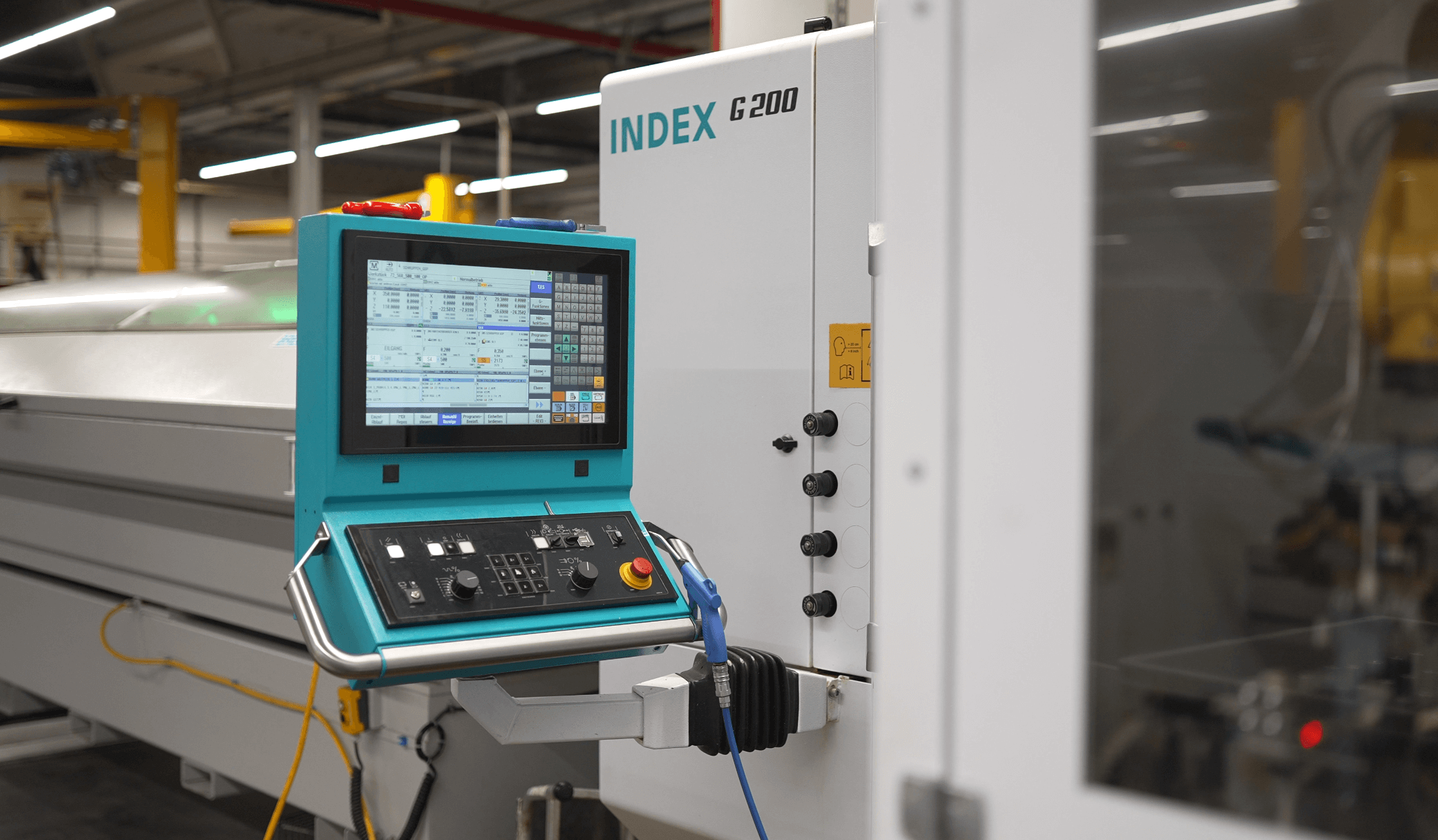
Novo AI in Real Manufacturing Environments
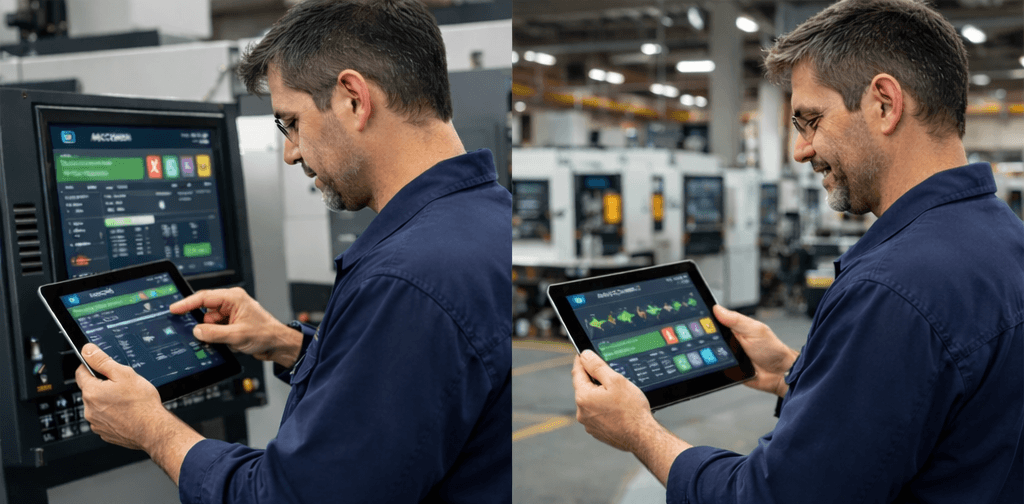
Manufacturing companies trust Novo AI because the solution starts where many digitalization projects fail: with the existing machine park. Instead of replacing machines or first starting a large platform project, Novo AI makes real machine states visible.
Companies such as Otto Männer, BlekoTec, Angstrom, Schauenburg Hose Technology, Bockmühlkabel, KUKA Romania, Sorst Streckmetall, Leibinger, Erich Uhe, Jacob Group Pipework and Karl Dungs represent different manufacturing realities — from precision engineering and metal and sheet metal processing to cable, hose, pipe and component manufacturing.
For these companies, theory is not what matters. Everyday production does. Machines need to run, downtime must be detected, idle time must not remain invisible and production decisions need a reliable data foundation. That is exactly what Novo AI was built for.
Novo AI helps companies approach this challenge pragmatically. First, it becomes visible what is happening at the machine. Then responsible teams can decide which processes should be improved, which data should be integrated and which systems should be added.
Common Misunderstandings When Comparing Novo AI and Factbird
Misunderstanding 1: Manufacturing Intelligence Is the Same in Every Solution
Manufacturing Intelligence can be implemented in very different ways. Some solutions start with production data platforms, Connected Operations and multiple data sources. Novo AI starts with retrofit sensor technology and AI-based state analysis for existing machines.
Misunderstanding 2: OEE Is Automatically Correct Once Software Is Available
OEE is only as good as the underlying data. If machine states, downtime, idle time and microstops are not detected cleanly, the KPI remains inaccurate.
Misunderstanding 3: A Production Data Platform Automatically Solves Every Brownfield Problem
A platform can be very strong when data is available. However, if old machines do not provide clean state data or are difficult to connect, data capture must be solved first.
Misunderstanding 4: Novo AI Replaces Every Factbird Function
Novo AI does not replace every Manufacturing Intelligence, Connected Operations or platform function. If a company wants to build comprehensive production data, digital shopfloor processes and cross-site analytics, Factbird can remain relevant.
Misunderstanding 5: Old Machines Need to Be Replaced
Many old machines produce reliably. The problem is often not the machine itself, but missing transparency. Novo AI helps make existing machines data-capable without replacing them.
These companies trust Novo AI














FAQ: Novo AI vs Factbird
Yes, but only for certain use cases. Novo AI is an alternative when the main goal is fast production monitoring for existing machines without PLC access. If a company first wants to make machine states, downtime, idle time, microstops and OEE visible, Novo AI can be the better entry point. However, if a broader Manufacturing Intelligence platform with production data from several sources, Connected Operations and cross-site transparency is needed, Factbird may be more suitable.
Factbird is better suited when a company wants to centrally capture, manage and analyze production data from several sources. Factbird is especially suitable when OEE, downtime, performance, production planning, Connected Operations and cross-site production data should be brought together in one platform.
Novo AI is better suited when the most important challenge is missing machine transparency on existing machines. If existing machines do not provide clean data, PLC access is difficult or the company quickly wants to see where downtime, idle time and microstops occur, Novo AI is often the better first step.
Yes. For many companies, this is sensible. Novo AI can be used as a transparency layer before a larger platform project. This allows the company to first see what is really happening in the machine park. This data later helps plan integrations and platform functions more precisely.
No. Novo AI does not replace every Factbird function. The solution is not a full Manufacturing Intelligence or Connected Operations platform. Its strength lies in retrofit production monitoring and the detection of real machine states without PLC access.
No. Novo AI can detect machine states without PLC access. The external AI sensor is mounted on the machine and uses physical signals such as vibration and acoustics. This makes Novo AI especially suitable for existing machine parks.
Novo AI is especially suitable for small and medium-sized manufacturing companies with mixed machine parks. This includes companies with old machines, different manufacturers, missing real-time transparency, unclear downtime, idle time problems or OEE goals.
The best first step is a pilot with a few relevant machines. Ideally, the company selects machines where downtime, idle time or unclear utilization are already known problems. With Novo AI, these machines can be monitored quickly. After that, the company can decide based on data whether more machines, ERP integration, MDE/BDE processes or a larger platform project should follow.
Factbird Creates Manufacturing Intelligence, Novo AI Makes Existing Machines Transparent
The decision between Novo AI and Factbird depends on the starting point.
Factbird is strong when a company is looking for a Manufacturing Intelligence platform for production data from several sources. The solution is suitable for companies that want to connect real-time production monitoring, OEE, downtime, performance, Connected Operations and cross-site transparency more closely.
Novo AI is strong when a company first needs to make real machine states visible. The solution is especially suitable for existing machines, old or mixed equipment, missing PLC access, unclear downtime, idle time, microstops and OEE transparency.
For many medium-sized manufacturing companies, Novo AI is therefore the better first step. Not because Factbird is bad, but because the most important foundation is often still missing: reliable data from the machines that are already in operation today.
If a company does not know when machines are truly producing, it should not start with a larger platform project that depends on this data. It should first make machine reality visible.
That is exactly what Novo AI was built for.
Whether Novo AI Is the Better First Step Before a Manufacturing Intelligence Project
Are you considering whether Factbird or another Manufacturing Intelligence platform is the right next step for your production?
Then it is worth starting with one simple question: Do you already know reliably when your existing machines are producing, stopped, running idle or losing time through microstops?
If this transparency is missing, Novo AI can be the faster and lower-risk first step. Start with a few machines, make real machine states visible and then decide based on data whether platform integration, ERP connection or further automation steps make sense.
Request a demo now and see how Novo AI makes your existing machines transparent without PLC access.
References
Factbird – Manufacturing Intelligence Suite - Offizielle Informationen zu Factbird als Manufacturing Intelligence Suite für Echtzeit-Produktionsmonitoring, multi-site OEE, linienbezogene Stillstandsanalyse, Connected Operations und Produktionsplanung mit Echtzeitdaten (Zugriff am: 01.07.2026)
Factbird – Real-Time Production Monitoring Software - Informationen zur Echtzeitüberwachung der Produktion mit Factbird, inklusive OEE, Downtime und Performance über Produktionslinien hinweg (Zugriff am: 01.07.2026)
SAP – Was ist ein MES (Manufacturing Execution System)? - Definition von MES als Softwaresystem zur Überwachung, Verfolgung, Dokumentation und Steuerung von Fertigungsprozessen (Zugriff am: 01.07.2026)
VDI – VDI 5600 Blatt 1: Manufacturing Execution Systems (MES) - Aufgabenorientierte Beschreibung von MES-Funktionen, Einsatzpotenzialen und Nutzen für produzierende Unternehmen (Zugriff am: 01.07.2026)
Novo AI – Maschinendaten für jeden Maschinenpark - Beispiel für herstellerunabhängige Maschinendatenerfassung mit KI-Sensor und WatchMen Plattform ohne Eingriff in die Maschinensteuerung (Zugriff am: 01.07.2026)
Novo AI – Kunden - Kundenstimmen und Praxisbeispiele zu Maschinenvernetzung, Echtzeitdaten, OEE-Steigerung, Verfügbarkeitsverbesserung und Reduktion von Energieverschwendung (Zugriff am: 01.07.2026)
Novo AI – Maschinen nachrüsten - Informationen zum Retrofit-Ansatz für bestehende Maschinenparks, Maschinendatenerfassung ohne komplexe IT-Integration und Produktivitätssteigerung (Zugriff am: 01.07.2026)
Novo AI – WatchMen Plattform - Übersicht zur WatchMen Plattform für Echtzeit-Produktionsüberwachung, Maschinendaten, Berichte, Analysen und industrielle KI-Anwendungen (Zugriff am: 01.07.2026)