Machine Monitoring: Manufacturer System or Independent Solution?
Many manufacturing companies want to make their machines more transparent. They want to understand which machines are running, which machines are idle, where downtime occurs, how often microstops happen, and why production performance is lower than expected. At first, this sounds like a simple software question. In practice, it is often a strategic decision about the whole machine park.
A factory can use monitoring systems supplied by machine manufacturers. These systems are often closely connected to the machines, controls, automation concepts and service environment of one specific manufacturer. Examples include DMG MORI Messenger, Mazak Smooth MONITOR AX, Okuma Connect Plan, DN Solutions iDOO RMS+ and TRUMPF Smart Factory or Oseon-related monitoring functions.
A factory can also use a manufacturer-independent monitoring solution. This type of solution is not built around one machine brand. It is designed to create a common view across different machines, manufacturers, ages and control generations. This is especially important in existing production environments where the machine park has grown over many years.
Novo AI is the AI-powered retrofit production monitoring solution for existing machines — with real-time machine data, OEE, downtime and microstop transparency without PLC access.
Manufacturer systems can be very useful when a factory is strongly centered around one machine ecosystem. An independent retrofit solution is usually more practical when the factory has mixed existing machines and first needs a reliable view of real machine states.
The main question is therefore not: “Which system is the most famous?” The better question is: “Which monitoring approach fits our machine park, our digital maturity and our first operational problem?”
Why this decision matters for existing machine parks
In many factories, the machine park is not clean and standardized. It is mixed. A production hall may include DMG MORI machines, Mazak machines, Okuma machines, TRUMPF machines, DN Solutions machines, older CNC machines, presses, bending machines, packaging machines, special-purpose machines and manually operated workstations.
Some machines may already provide useful digital data. Others may have old controls. Some may support modern interfaces. Others may not. Some may belong to a strong manufacturer ecosystem. Others may be isolated but still highly important for production.
This is exactly why the monitoring decision matters. If a company chooses a manufacturer-specific system, it may get strong visibility for machines from that manufacturer. But it may still have blind spots across the rest of the production floor. If a company chooses a manufacturer-independent system, it can create a more unified monitoring layer across different machines.
For many small and mid-sized manufacturers, the first challenge is not building a perfect Industry 4.0 architecture. The first challenge is much simpler: they need to know what is actually happening at the machine.
Is the machine producing? Is it waiting? Is it idle? Is it stopped? Are small interruptions repeating every shift? Is the planned runtime realistic? Are the same losses happening every day?
Without this basic transparency, bigger digitalization projects become harder to prioritize. A company may invest in a new machine, a new MES, a new gateway or a manufacturer system without first knowing whether the real problem is missing capacity, hidden downtime, poor utilization, planning errors or unmeasured microstops.
That is why manufacturer-specific monitoring and independent monitoring should not be compared only by feature lists. They should be compared by starting point.
Short summary: machine monitoring manufacturer system or independent monitoring?
A manufacturer system is usually the best fit when the factory is strongly centered around one machine manufacturer. If most of the machines are from one brand, and if the company wants to use that manufacturer’s digital ecosystem, service environment or machine-specific software, the manufacturer solution can be a good option.
An independent solution is usually the better fit when the factory has a mixed machine park. This is especially true when the company has old and new machines from different brands and when direct PLC access is difficult, expensive or not desired.
Decision situation
Manufacturer-specific monitoring
Novo AI WatchMen
In simple terms: manufacturer systems are strong inside their own ecosystem. Novo AI is strong when the factory needs one transparent view across a mixed existing machine park.
What is manufacturer-specific machine monitoring?
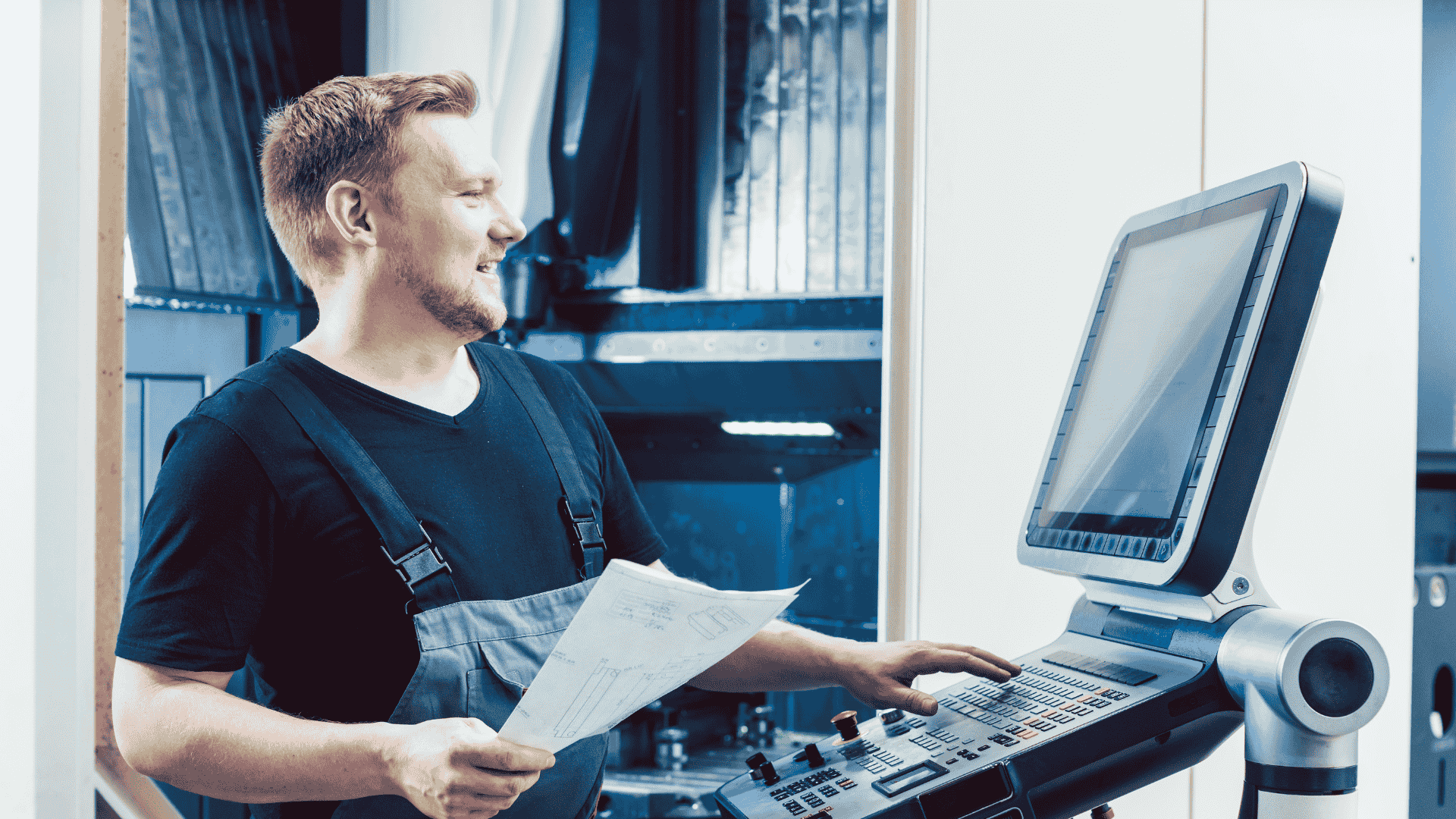
Manufacturer-specific machine monitoring means that the machine manufacturer provides its own digital monitoring, connectivity or smart factory environment. These systems are often connected to the manufacturer’s machines, controls, software, service tools and automation concepts.
This can be useful because the manufacturer knows its own machine environment very well. A manufacturer system may provide machine status, alarms, service information, operating data, condition monitoring, production flow information or remote support. It may also be integrated into a broader machine ecosystem with automation, CNC controls, machine dashboards, service portals or smart factory functions.
For example, DMG MORI describes Messenger as machine monitoring that shows the status of connected machines in the DMG MORI connectivity environment. Mazak describes Smooth MONITOR AX as compatible with MTConnect and able to connect and monitor Mazak machines, including machines not manufactured by Mazak. Okuma describes Connect Plan as a system for connecting machine tools and giving visual control of factory operations and machining records. DN Solutions describes iDOO RMS+ as a monitoring solution that collects and analyzes machine data in real time to control factory operation status and production flow. TRUMPF positions Oseon around production and material flow control for sheet metal processing.
These are real and relevant systems. They should not be dismissed. They can be very useful when a company is already strongly invested in the manufacturer’s ecosystem.
The limitation appears when the production environment is mixed. A factory may use one manufacturer’s monitoring system for a part of the machine park, but still have older machines, third-party machines or special-purpose machines that remain difficult to monitor. In that situation, the company may still not have a complete view of production reality.
What is manufacturer-independent machine monitoring?
Manufacturer-independent machine monitoring is different. It is not built around one machine brand. Its purpose is to create a common monitoring layer across different machines, different years of manufacture and different control systems.
This is especially important in brownfield production environments. In many factories, machines are not replaced every few years. They stay in production for decades. They may be mechanically reliable and economically important, but they do not always provide clean digital data. Some machines were never designed for modern data collection. Others have interfaces, but the integration would be too complex. Some can be connected, but not quickly enough for a practical first step.
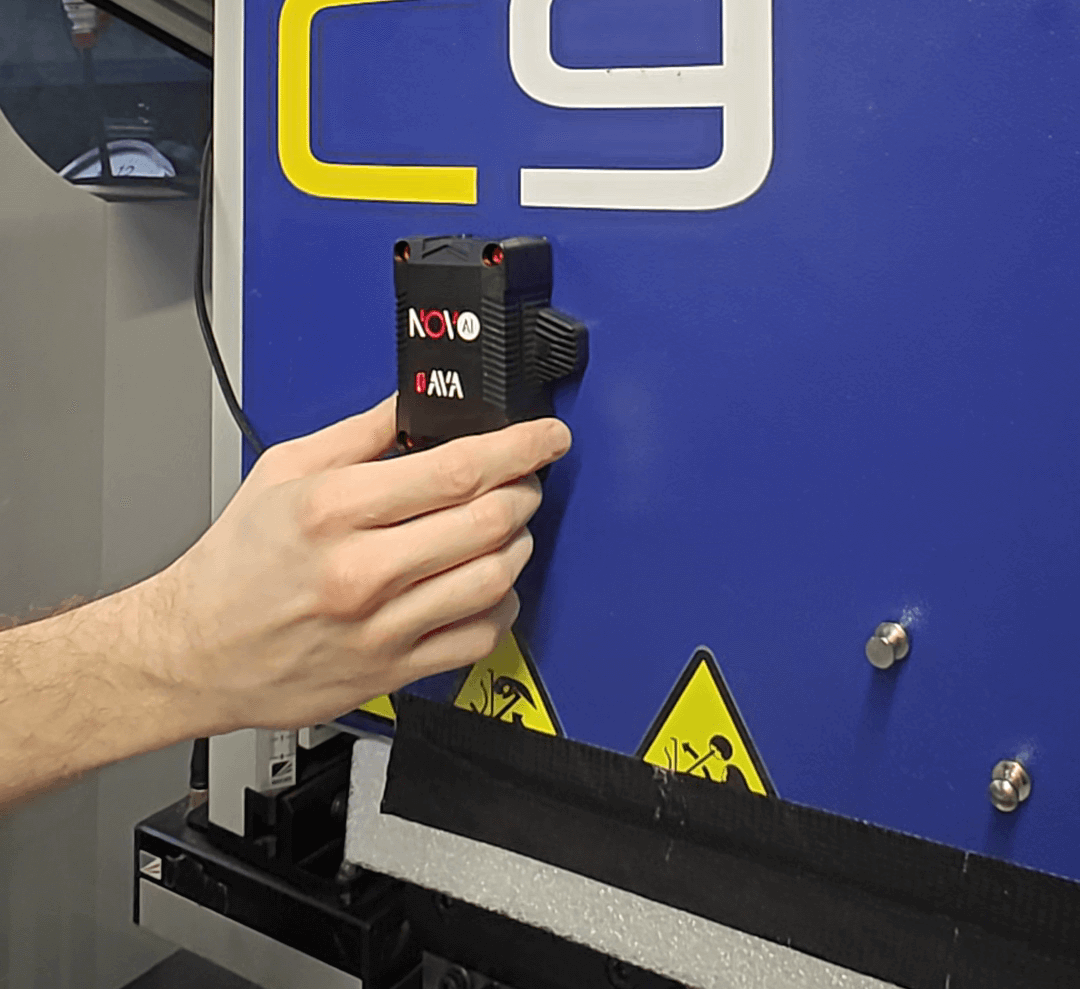
Novo AI uses a retrofit approach for this situation. Instead of starting with the machine control, Novo AI starts with the real machine behavior. An external AI sensor is mounted on the machine and detects physical signals such as vibration, acoustics and machine patterns. These signals are used to identify machine states such as production, idle time, downtime and microstops.
The data becomes visible in the WatchMen platform. Production managers can see which machines are running, which machines are stopped, where idle time occurs and which machines repeatedly deviate from expected performance. Novo AI’s own pages describe this approach as a way to receive machine data about runtimes, idle phases, downtime and production cycles from existing machines.
The value is not only technical. It is operational. The production team does not just receive raw data. It receives a clearer view of where production time is lost.
Manufacturer-specific systems: where they fit best
Manufacturer-specific systems are strongest when the company already works heavily within one machine ecosystem. In that case, the monitoring system can be part of a broader strategy around machines, service, automation and digital manufacturing.
A DMG MORI-heavy production environment may benefit from DMG MORI connectivity and Messenger. A Mazak-centric shop may benefit from Smooth MONITOR AX, especially when machines are MTConnect-connected. An Okuma-focused factory may benefit from Connect Plan. A DN Solutions environment may benefit from iDOO RMS+. A TRUMPF-focused sheet metal factory may benefit from Oseon, TruTops-related functions, connectivity and TRUMPF Smart Factory concepts.
In these cases, the manufacturer solution can be close to the machine and close to the service environment. That can be a real advantage. The system may know the machine family, the control logic and the manufacturer’s digital architecture.
However, the fit becomes weaker when the company’s main challenge is not manufacturer-specific. If the company wants to monitor machines from many different manufacturers, the first question becomes: can the system give one reliable view across the whole shopfloor? If not, the company may end up with several separate systems and still no unified picture.
For many production managers, this is the central problem. They do not want five isolated dashboards. They want one practical view of machine reality.
Novo AI WatchMen: where an independent retrofit layer fits best
Novo AI WatchMen fits best when a factory has mixed existing machines and needs a faster way to make machine states visible. This is common in small and mid-sized manufacturing companies.
The factory may have a few modern machines that could be connected through manufacturer tools. But it may also have older machines that still produce critical parts. These machines may not provide clean digital data. They may have older controls. They may not support modern interfaces. They may be expensive or risky to integrate directly through the PLC.
In this situation, Novo AI can be the more practical first step because it does not depend on the machine manufacturer’s ecosystem. It is designed to monitor existing machines through retrofit sensor technology. Novo AI also describes its solution as applicable to industrial production machines regardless of manufacturer, type, year of manufacture or existing technology.
That does not mean Novo AI replaces every manufacturer solution. It means Novo AI solves a different first problem: creating machine-state transparency across the real installed base.
This matters because machine utilization problems often hide in everyday production. A machine may technically run but not produce value. A shift may lose time through short interruptions. A line may wait for material. A machine may stop repeatedly for small reasons that nobody documents. Without reliable monitoring, these losses remain opinions rather than facts.
Novo AI turns this machine reality into visible data.
Learn More: Novo AI
Comparison by decision criteria
Machine park structure
The first criterion is the structure of the machine park. If a company runs mostly one machine brand, a manufacturer-specific system may fit well. The company can benefit from the manufacturer’s machine knowledge, service environment and digital ecosystem.
If the machine park is mixed, the situation changes. A mixed machine park needs a monitoring layer that can work across brands. This is where a manufacturer-independent approach becomes more valuable. The more heterogeneous the shopfloor is, the more important a common monitoring layer becomes.
For Novo AI, this is one of the main positioning advantages. It is not limited to one machine brand. It is built for the type of real-world production environment where old and new machines operate next to each other.
Data access
The second criterion is data access. Manufacturer systems often work well when machines provide the right data and when the machine environment is compatible. This can be very effective for modern machines.
But in many factories, data access is not simple. PLC access may be restricted. Interfaces may be missing. Older controls may not provide useful data. Some machines may technically provide data, but only after a long integration project.
Novo AI is stronger when machine-state transparency is needed without direct PLC access. The external sensor approach makes it possible to start monitoring before the company has solved every machine-interface question.
Implementation speed
Manufacturer-specific monitoring can be fast when the machine environment is already compatible. But it can become more complex when machines are older, when third-party machines are involved or when the project becomes part of a larger smart factory architecture.
Novo AI is designed as a faster retrofit entry point. A company can start with a small pilot, monitor a few important machines and quickly understand whether the data reveals meaningful losses. This is especially useful when the company wants to reduce risk before a larger investment.
OEE, downtime and microstops
OEE and downtime visibility depend heavily on data quality. A system can only calculate useful OEE if it has reliable information about production time, planned time, stops, idle phases and performance losses.
Manufacturer systems can support this if the right data is available. But they may not always capture the full operational reality across the whole factory, especially in mixed environments.
Novo AI focuses directly on machine states such as runtime, idle time, downtime and microstops. This makes it particularly relevant when the first goal is not a complete digital factory, but a reliable loss picture.
Service and machine ecosystem
Manufacturer-specific systems have a clear advantage when the goal is closely connected to service, machine-specific diagnostics, automation or the manufacturer’s own digital tools. In that case, the manufacturer system may provide better access to machine-specific functions.
Novo AI is not designed to replace manufacturer service or machine-specific engineering tools. Its purpose is to provide production monitoring and operational transparency across existing machines. That is a different layer.
Best first step
The best first step depends on the factory’s current problem. If the company wants to extend a strong manufacturer ecosystem, the manufacturer solution may be the right first step. If the company does not yet know what is happening across the whole machine park, an independent monitoring layer is often the better first step.
This is the practical decision point: do you already have the right machine data, or do you first need to create it?
DMG MORI Messenger
DMG MORI Messenger is relevant for factories with a strong DMG MORI machine base. In the DMG MORI connectivity environment, Messenger is described as machine monitoring that shows the status of connected machines.
This makes it useful when a company wants to monitor machines within the DMG MORI ecosystem and use DMG MORI connectivity, service and digital manufacturing tools. For a DMG MORI-heavy shop, this can be a natural choice.
The limitation is not that Messenger is weak. The limitation is that many factories are not purely DMG MORI environments. If important machines from other brands remain outside the monitoring logic, the production team may still lack a unified shopfloor view.
Novo AI is the better fit when the company wants to monitor mixed existing machines and make machine states visible without relying on one manufacturer ecosystem.
Learn More: DMG MORI Alternative for Existing Machines
Mazak Smooth MONITOR AX
Mazak Smooth MONITOR AX is relevant for Mazak-centric production environments. Mazak describes the system as compatible with MTConnect and able to connect and monitor Mazak machines, including machines not manufactured by Mazak.
This is important because it gives Mazak Smooth MONITOR AX a stronger overlap with independent monitoring than a normal manufacturer tool. If a company already works strongly with Mazak and MTConnect-connected equipment, Smooth MONITOR AX can be a relevant monitoring option.
However, compatibility and practical value still depend on the actual machine park. In older or more heterogeneous environments, the first challenge may still be to create reliable machine-state data where digital data is missing or difficult to access.
Novo AI is stronger when the factory needs to see runtime, idle time, downtime, microstops and OEE across mixed existing machines without first solving every interface question.
Learn More: Mazak Alternative for Existing Machines
Okuma Connect Plan
Okuma Connect Plan is one of the strongest manufacturer-specific candidates in this cluster. Okuma describes Connect Plan as a system for connecting machine tools and providing visual information about factory operations and machining records. Okuma also says accommodations can be made for non-Okuma controls, which makes the overlap with manufacturer-independent monitoring more meaningful.
This makes Okuma Connect Plan especially interesting for Okuma-focused factories and compatible connected machines. If a company has many Okuma machines and wants a monitoring solution inside that environment, Connect Plan can be a serious option.
Still, the decision depends on the first operational problem. If the company has a mixed machine park and wants to avoid direct PLC dependency, Novo AI may be the more practical first layer. The value of Novo AI is not tied to one control ecosystem. It is tied to making real machine states visible.
Learn More: Okuma Alternative for Existing Machines
DN Solutions iDOO RMS+
DN Solutions iDOO RMS+ is a monitoring solution for DN Solutions digital manufacturing environments. DN Solutions describes iDOO RMS+ as collecting and analyzing machine data in real time to provide integrated control over factory operation status and production flow.
This makes it relevant when a company uses DN Solutions machines and wants to monitor production flow, machine status, alarms and related operational information in that ecosystem.
For a DN Solutions-centered production environment, iDOO RMS+ can be a logical fit. For a mixed existing machine park, the question is different: can the system create one consistent view across all machines, including older and non-DN-Solutions machines?
Novo AI is usually the better fit when the first goal is manufacturer-independent machine-state transparency without PLC access.
Learn More: DN Solutions Alternative for Existing Machines
TRUMPF machine monitoring and Smart Factory
TRUMPF is especially relevant in sheet metal production. TRUMPF positions Oseon around production and material flow control for sheet metal processors. TRUMPF Smart Factory concepts are relevant when a company wants to connect people, machines, automation and software in a more integrated sheet-metal production environment.
This makes TRUMPF a strong option for TRUMPF-centered sheet metal factories. If the company uses TRUMPF machines, automation, Oseon or related software, TRUMPF’s own ecosystem can be a good fit.
The limitation appears when the production environment extends beyond TRUMPF. Many factories also use machines from other brands or older systems that do not fit neatly into one manufacturer’s digital architecture.
Novo AI is stronger when the company wants to monitor a mixed existing machine park and create a common view of runtime, idle time, downtime and microstops without PLC access.
Learn More: TRUMPF Alternative for Existing Machines
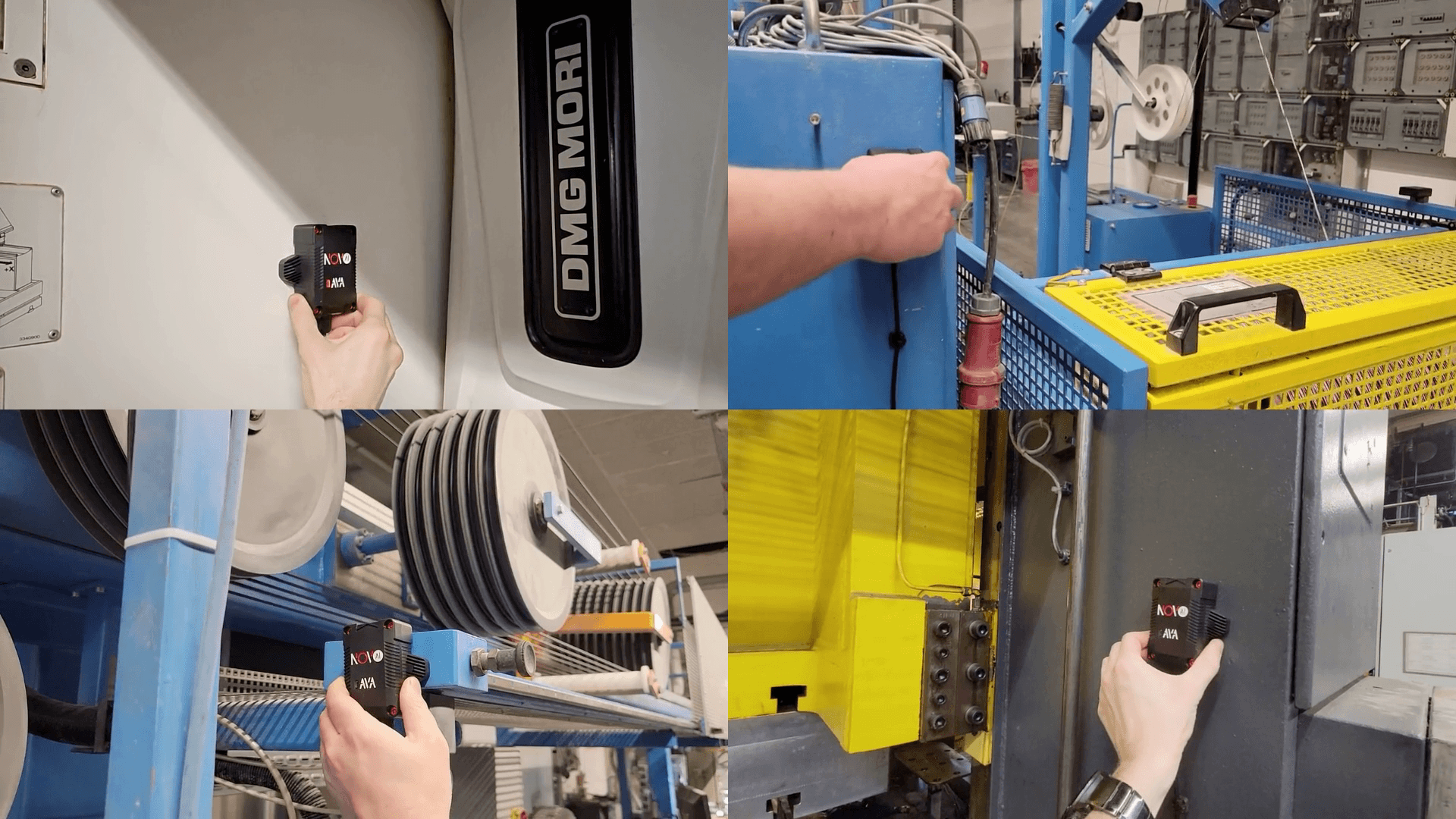
When Novo AI is the better fit
Novo AI is the better fit when the machine park is heterogeneous and the company needs practical production transparency before a larger digitalization project.
This is common when the factory includes machines from different manufacturers, older machines without modern interfaces, manual or semi-automated processes, special-purpose machines and machines where PLC access is not desirable.
Novo AI is also a better fit when the company wants to start with a pilot instead of a large system project. A production team can select a few important machines, measure real states and quickly see where losses occur.
This is especially useful for OEE projects. Many companies want to introduce OEE but do not have reliable data for availability, performance losses, idle time or microstops. Without machine-state data, OEE becomes an estimate. With reliable monitoring, OEE becomes a management tool.
When a manufacturer system is the better fit
A manufacturer system is the better fit when the factory is strongly standardized around one manufacturer and wants to use that manufacturer’s digital ecosystem.
This can be the case when the company has mostly machines from one brand, uses modern compatible controls, wants manufacturer-specific service functions, wants to extend automation or wants to integrate monitoring with machine-specific software.
In that situation, a manufacturer solution can be efficient because it is close to the machine technology.
But if the company has many brands and older machines, the manufacturer system may only solve part of the problem. The company may still need an independent layer to cover the rest of the machine park.
Recommendation for manufacturing SMEs
For many manufacturing SMEs, the best strategy is not “manufacturer system or independent system forever.” The best strategy is to choose the right first step.
If the company already works strongly inside one manufacturer ecosystem, the manufacturer system may be useful. But if the company does not yet know what is happening across the whole machine park, it should first create machine-state transparency.
A practical sequence looks like this:
First, make machine states visible across the most important existing machines. Then analyze downtime, idle time and microstops. After that, connect order data, ERP data or MES data where it creates real value. Only then decide whether manufacturer systems, gateways, MES projects or new machine investments are necessary.
This sequence reduces risk. The company does not start with assumptions. It starts with real production data.
What about independent shop floor management and monitoring platforms?
In addition to manufacturer-specific systems, there are also independent shop floor management, MDA/PDA and monitoring platforms. These solutions are not tied to one machine manufacturer and can be useful for companies that want to centralize production data, machine states, reports, maintenance information or shop floor processes.
The difference compared with Novo AI is the starting point. Many platforms are especially strong when data is already available or can be connected through existing interfaces. Novo AI starts earlier: it helps make real machine states visible on existing machines through retrofit sensor technology, even when PLC access is not possible, not desired or too time-consuming.
For a broader overview of alternatives to shop floor monitoring and production monitoring systems, read the comparison: Best Production Monitoring Software for Existing Machines.
These companies trust Novo AI











Frequently asked questions
Manufacturer-specific monitoring is built around one machine manufacturer’s ecosystem. It can be very useful when the factory mainly uses that manufacturer’s machines. Manufacturer-independent monitoring is built to create one view across mixed machines from different brands.
A factory should consider a manufacturer system when most machines are from one manufacturer, the machines are compatible and the company wants to use that manufacturer’s service, automation or smart factory environment.
A factory should consider Novo AI when it has mixed existing machines and wants to see runtime, idle time, downtime, microstops and OEE without depending on PLC access.
Not always. Novo AI can replace the need for a manufacturer system in some monitoring use cases, but it can also complement manufacturer systems by covering older or mixed machines that are not easily integrated.
Usually, yes. If a production environment contains many machine brands, ages and control generations, an independent monitoring layer is often the more practical first step.
Yes. Novo AI is designed for existing machines and uses a retrofit sensor approach. Novo AI describes its solution as suitable for machines regardless of manufacturer, type, year of manufacture or existing technology.
The best first step is usually a pilot with a few important machines. The company can then see whether the monitoring data reveals hidden downtime, idle time or microstops. After that, it can decide which integrations or manufacturer systems are still needed.
Manufacturer systems are strong in their ecosystem, Novo AI is strong in mixed machine parks
Manufacturer-specific monitoring systems can be a good choice when the factory is strongly centered around one machine manufacturer. DMG MORI Messenger, Mazak Smooth MONITOR AX, Okuma Connect Plan, DN Solutions iDOO RMS+ and TRUMPF Smart Factory solutions all have clear use cases.
Novo AI is stronger when the factory has a mixed existing machine park and needs one practical view of real machine states. That is especially important when machines are older, data access is limited or PLC integration is not the right first step.
For many manufacturing SMEs, Novo AI is therefore the better starting point. Not because manufacturer systems are bad, but because the first operational problem is often broader: the company does not yet know what is really happening across all important machines.
If machine reality is still unclear, the first step should be to make it visible.
Check whether independent monitoring fits your machine park
You use machines from different manufacturers and want to understand what is really happening in production?
Then start with one question:
Do you already know when your existing machines are producing, waiting, idle, stopped or losing time through microstops?
If not, Novo AI can be the faster and lower-risk first step. Start with a few machines, make real machine states visible and then decide which manufacturer systems, MES projects, ERP integrations or smart factory steps are really necessary.
Request a demo and see how Novo AI makes mixed existing machine parks transparent without PLC access.
Sources and further reading
- Novo AI – Machine Data for Every Machine Park - Information about capturing runtime, idle phases, downtime and production cycles with an AI sensor and WatchMen platform for existing machine parks. Accessed: 17.08.2026.
- Novo AI – Industry 4.0 AI Solutions for Production Downtime & Energy Efficiency - Information about retrofitting industrial production machines regardless of manufacturer, type, year of manufacture or existing technology. Accessed: 17.08.2026.
- DMG MORI – Connectivity / Messenger - Information about DMG MORI Connectivity and Messenger for machine monitoring and connected machine status. Accessed: 17.08.2026.
- Mazak – Smooth MONITOR AX - Information about Smooth MONITOR AX, MTConnect compatibility and monitoring of Mazak and non-Mazak machines. Accessed: 17.08.2026.
- Okuma – Connect Plan - Information about Connect Plan for connecting machine tools and visual control of factory operation results and machining records. Accessed: 17.08.2026.
- DN Solutions – iDOO RMS+ - Information about iDOO RMS+ as a monitoring solution for collecting and analyzing machine data in real time. Accessed: 17.08.2026.
- TRUMPF – Oseon - Information about Oseon as production and material flow control software for sheet metal processors. Accessed: 17.08.2026.