
Okuma Alternative for Machine Data: Monitor Existing Machines Without PLC Access
Many manufacturing companies use Okuma machines or consider Okuma solutions when it comes to CNC machining, lathes, machining centers, grinding machines, automation, OSP controls, Smart Factory and machine connectivity. Okuma is an established manufacturer of CNC machine tools and, in addition to machines, offers control technology, automation and digital solutions for modern manufacturing environments.
At the same time, many production managers face a different and very practical question: How can I obtain reliable machine data from my existing machine park without replacing machines, starting a major integration project or directly accessing the PLC control system?
This is exactly where the comparison between Okuma and Novo AI becomes relevant. The question is not whether Okuma or Novo AI is “better.” The two solutions address different problems. Okuma is primarily a provider of machines, control technology, automation and digitalization solutions for CNC manufacturing. Novo AI focuses on retrofit-oriented production monitoring for existing machine parks.
Novo AI is an AI-powered retrofit production monitoring solution for existing machines – providing real-time machine data and transparency into OEE, downtime and microstops without PLC access.
This page is intended for manufacturing companies that use Okuma machines, are considering Okuma Connect Plan or are looking for an alternative way to make machine data visible independently of the machine manufacturer. It is particularly relevant for companies with mixed machine parks: Okuma, DMG MORI, Mazak, Haas, Hermle, Chiron, Spinner, Index, Amada, Bystronic, TRUMPF, older CNC machines, special-purpose machines, presses, press brakes, winding machines, packaging equipment or other existing machines.
The key question is not: “Should I buy Okuma or Novo AI?” The better question is: “Do I want to invest in new machines, Okuma Automation or Okuma-related machine connectivity – or do I want to quickly gain transparency across my existing machine park?”
Quick Conclusion: Which Solution Is Suitable for Which Situation?
Okuma is particularly suitable for companies looking for new CNC machine tools, lathes, machining centers, grinding machines, multitasking machines, OSP controls, automation or Okuma-related Smart Factory solutions. If a company wants to add new machining capacity, establish high-precision CNC processes, expand automation or develop an Okuma-centered digital manufacturing environment, Okuma is a relevant provider.
Novo AI is particularly suitable for companies that want to make their existing machines visible. This is especially relevant when the machine park is mixed, machines from different manufacturers are in use, older equipment does not provide reliable digital data or PLC access is difficult, expensive, undesirable or economically unjustifiable.
The most important difference is this: Okuma is strong in CNC machines, controls, drive technology, automation, OSP, Connect Plan and Smart Factory concepts around the Okuma machine ecosystem. Novo AI is strong in retrofit-oriented production monitoring when the first priority is to make actual machine states visible.
Decision Criteria
Novo AI
Okuma
In short: If a company is looking for new CNC technology, Okuma Automation or Okuma-specific machine connectivity, Okuma is a very good fit. If a company first wants to make existing machines from different manufacturers visible, Novo AI is often the more pragmatic first step.
What Is Okuma?
Okuma is a global manufacturer of CNC machine tools and manufacturing technology. The company offers CNC lathes, multitasking machines, machining centers, grinding machines, CNC controls, automation technology, drives, servo motors and other components for modern production environments. The German Okuma website describes Okuma Germany as the sales and service subsidiary of Okuma Corporation and as part of the European Okuma organization.
For many manufacturing companies, Okuma is best known for providing CNC technology from a single source. One particularly important aspect is Okuma’s single-source philosophy: the CNC machine, control, drives, motors and spindles come from one coordinated system environment. For companies looking for high process stability, precision and closely integrated CNC technology, this can be an important advantage.
Okuma offers several machine categories. These include CNC lathes, CNC machining centers, turn-mill centers, grinding machines and automation solutions. Okuma describes its lathes as solutions designed for high accuracy and efficiency. Its 4-axis lathes and multitasking turn-mill centers are designed to combine multiple machining processes and reduce lead times. In the grinding machine segment, Okuma emphasizes high dimensional and form accuracy, surface quality and stable grinding processes.
In addition to machines, Okuma also offers automation solutions. These include robot-assisted solutions, pallet handling, workpiece handling and customized automation concepts. Okuma describes modern factory automation as a combination of intelligent CNC machines, connected data processing and robotics. This makes Okuma particularly relevant when a company does not simply want to purchase individual machines, but wants to combine CNC machining and automation.
Okuma Connect Plan is particularly important for the comparison with Novo AI. Okuma describes Connect Plan as a solution for connecting machine tools and visualizing production processes. The system collects and monitors data to optimize processes and increase productivity. The OSP control is connected to a PC on which the Factory Monitor app is installed. This makes it possible to view the machine’s operating status from the production area, the office or a smartphone.
Okuma Connect Plan also provides machine alerts by email and, with Okuma NET BOX suite-C, can integrate machines from other manufacturers into the network. According to Okuma, data on machine status, operating history and alarm history can be analyzed, unwanted stops can be identified and improvement potential can be highlighted.
This means that Okuma is more than a machine manufacturer. It offers a broad ecosystem of CNC machines, controls, automation, service and Smart Factory functions. For companies with a strong Okuma machine base, this ecosystem can be highly valuable.
For an alternative page, however, one distinction is important: Okuma primarily addresses requirements related to CNC machines, OSP controls, automation, Okuma-related machine connectivity and Smart Factory. Novo AI addresses a different question: How can actual machine states across an existing mixed machine park be made visible, even when straightforward PLC access is not available?
What Is Novo AI?
Novo AI is an AI-powered retrofit production monitoring solution for existing machines – providing real-time machine data and transparency into OEE, downtime and microstops without PLC access.
The key difference compared with conventional machine, CNC, connectivity or automation approaches lies in the starting point. Novo AI does not assume that every machine already has modern digital interfaces. Novo AI starts directly with the existing machine.
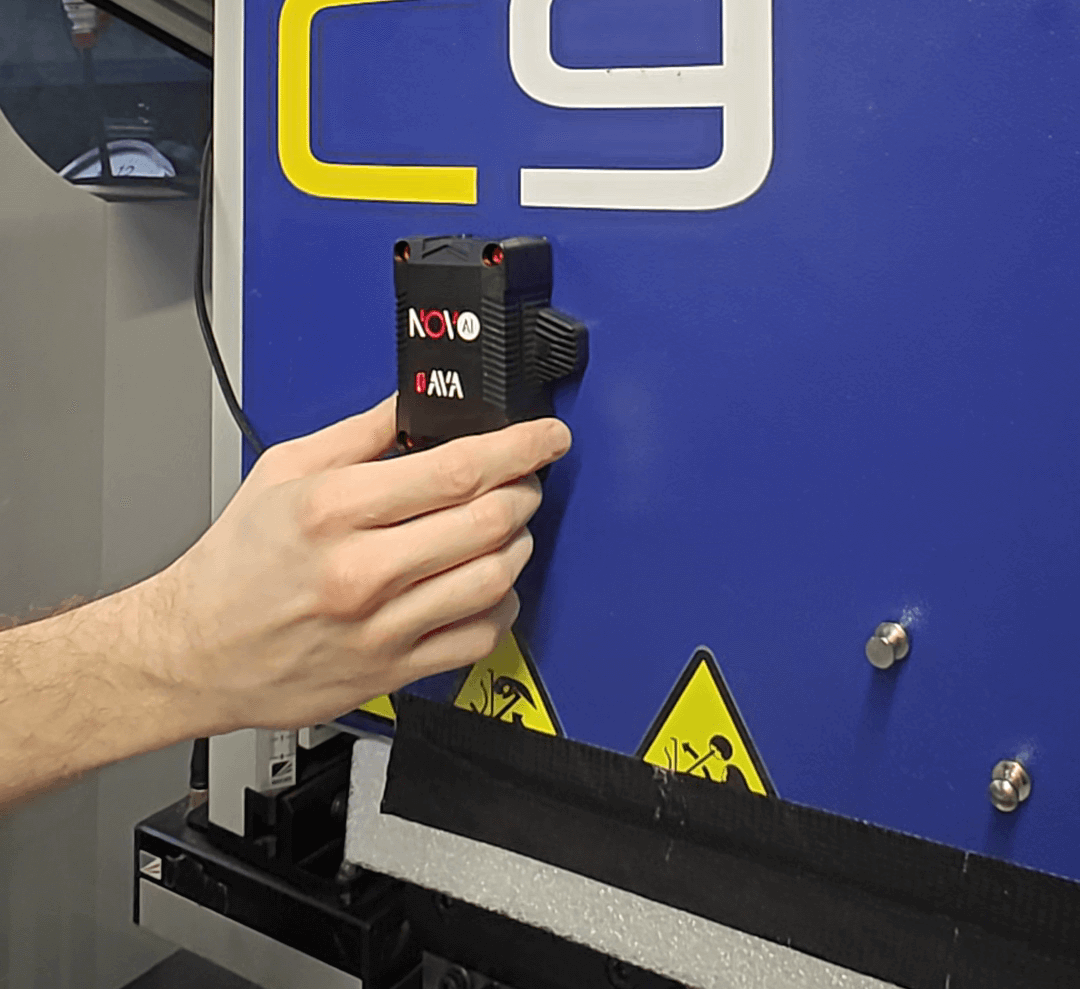
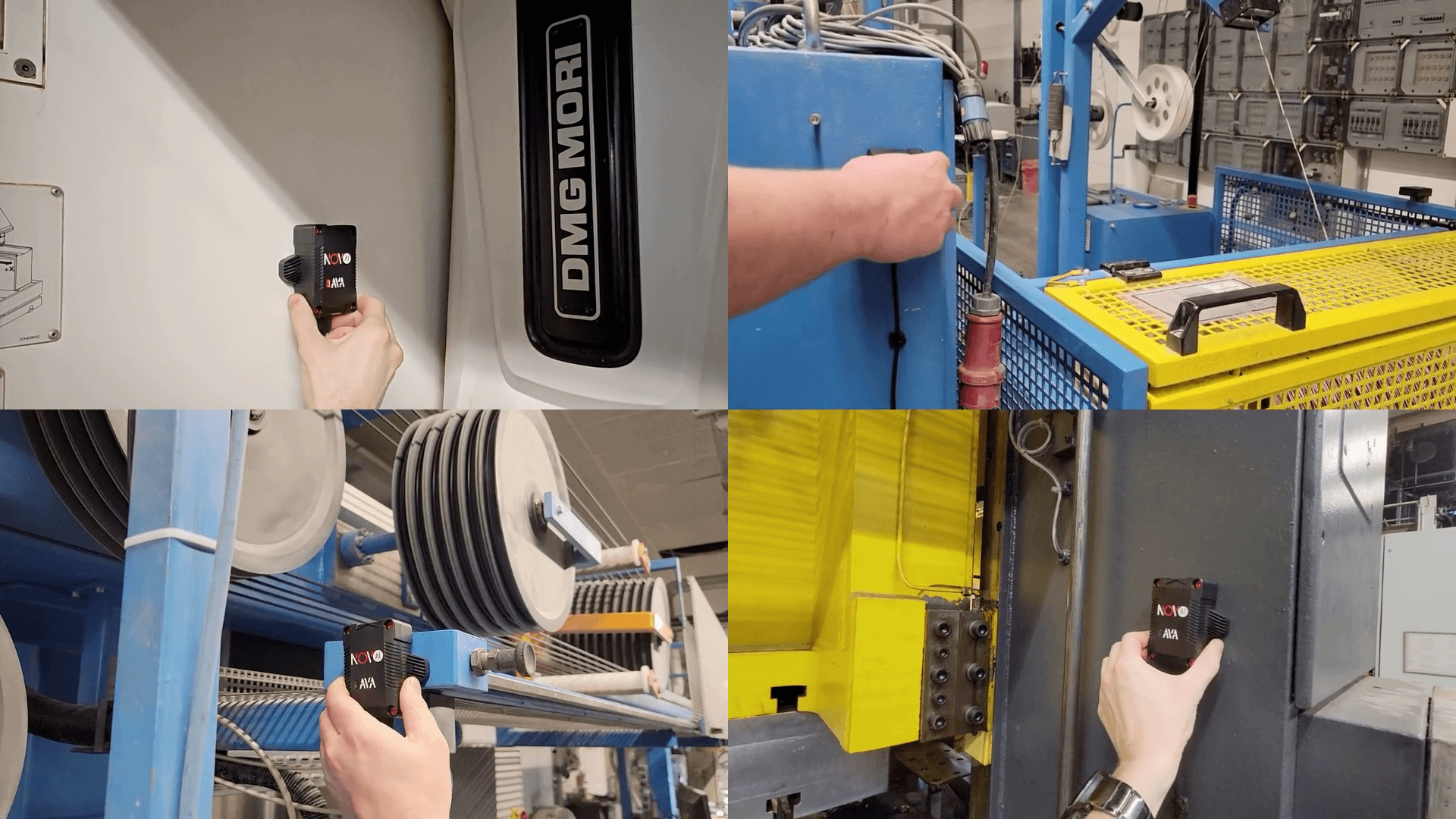
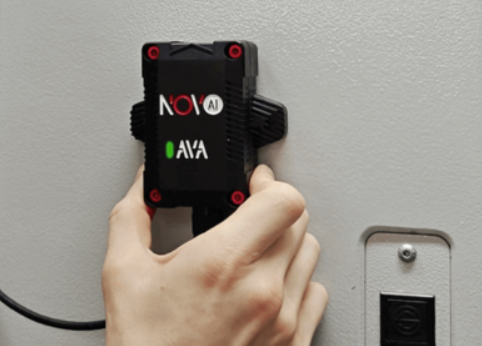
An external AI sensor is mounted on the outside of the machine. The sensor captures physical signals such as vibration and acoustics and, depending on the setup, additional machine patterns. The signals are processed directly at the sensor or within a suitable edge architecture. Based on them, Novo AI identifies production-relevant states such as production, idle time, downtime, microstops and unusual deviations.
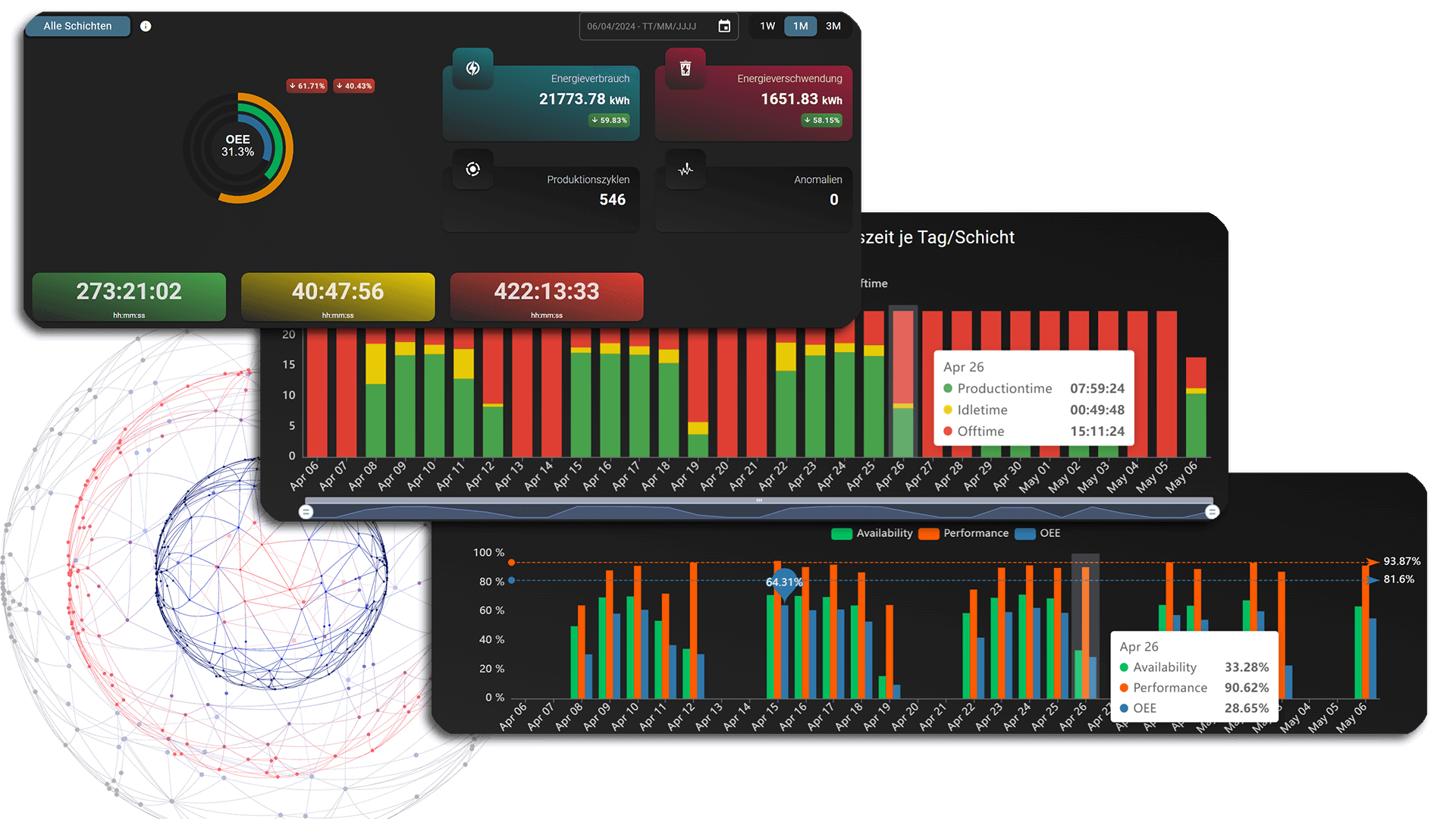
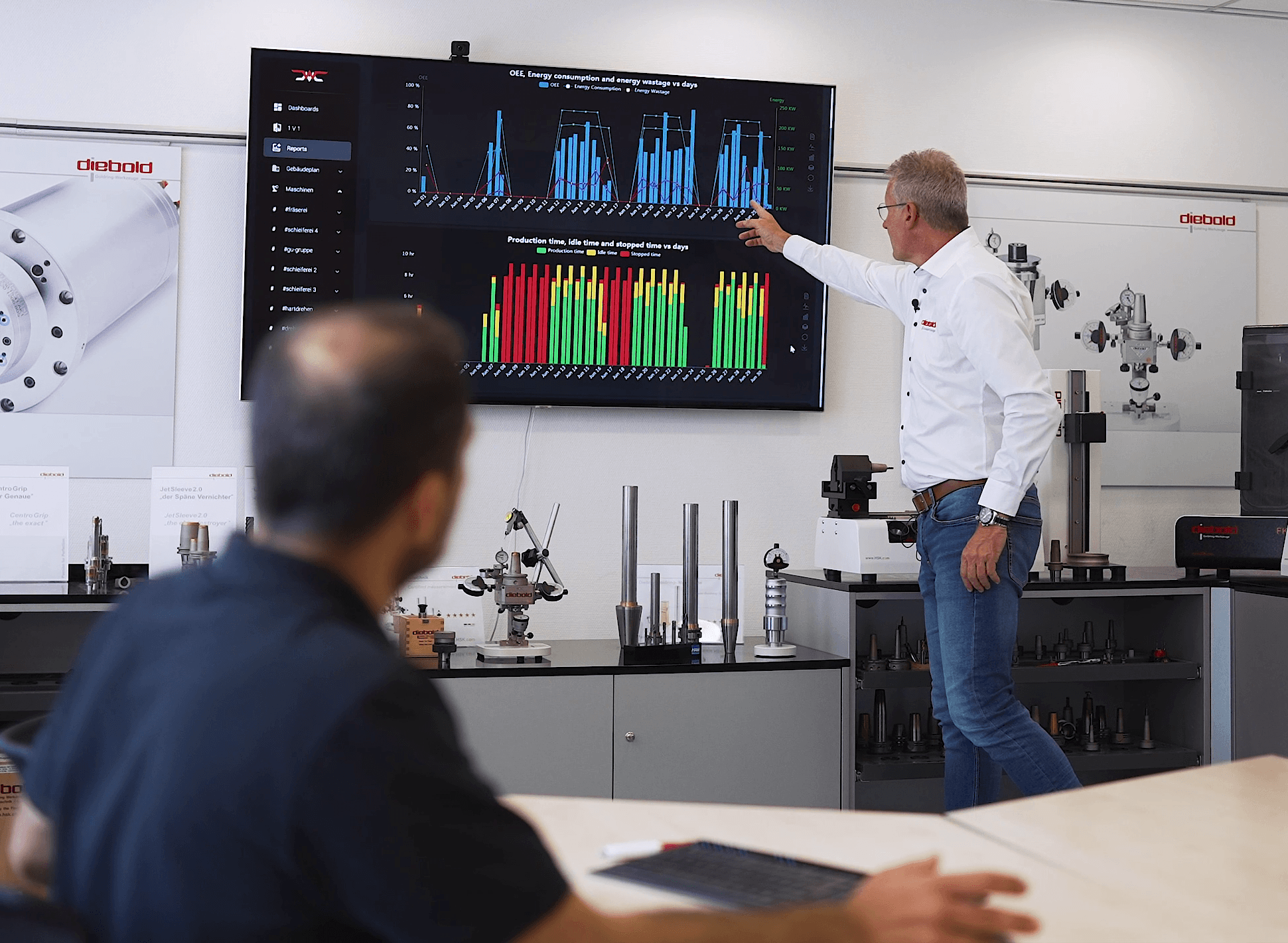
The data is made visible in the WatchMen platform. Production managers can see which machines are running, which machines have stopped, where idle time occurs, which machines frequently deviate from target performance and how microstops accumulate across shifts. When combined with production order, ERP, production data acquisition or machine data acquisition data, WatchMen can also show which order is affected and how actual production times differ from planned times.
Novo AI is therefore particularly relevant for mid-sized companies with existing machine parks. Many manufacturers do not start with a perfectly digitalized production environment. They operate Okuma machines alongside machines from other manufacturers. They have older and newer equipment. They have manual workstations, partially automated processes, older controls and production environments that have evolved over many years. This is exactly where Novo AI comes in.
Novo AI is not an alternative to a new Okuma machine. Novo AI does not replace a turning center, machining center, grinding machine, multitasking machine or automation cell. Novo AI is an alternative when the question is how existing machines can be made transparent quickly and independently of the machine manufacturer.
The goal is not to buy more machines. The goal is to get more out of the machines you already have by making lost production time visible.
Why the Comparison Matters for Existing Machines
Many companies think of new machines, modern CNC controls, automation cells, IoT connectivity or large IT/OT projects first when they consider digitalization. That can make sense, but it is not always the best first step. Especially for mid-sized manufacturers, the existing machine park is often the biggest lever.
A machine does not have to be new to be productive. Many older machines continue to manufacture reliably, accurately and economically. The problem is often not the machine itself, but the lack of transparency. Production managers may know that a machine should theoretically be running. But they do not always know exactly how much time was genuinely productive, how much idle time occurred, how many microstops took place or why a production order took longer than planned.
For Okuma machines, technologies such as OSP controls, Connect Plan, Factory Monitor, alerts and Okuma NET BOX suite-C can be useful. If a company operates modern Okuma machines and has the appropriate infrastructure in place, these solutions can make an important contribution to connectivity and monitoring.
However, many real-world machine parks are not homogeneous. A typical production environment does not contain only Okuma machines. It contains machines from different manufacturers, years of manufacture, control systems and levels of digital capability. Some machines provide data. Others do not provide reliable data. Others could theoretically be connected, but the effort required would be too high.
In these environments, a different requirement emerges: The company needs a manufacturer-independent view across the entire machine park. It does not only want to know what one particular modern Okuma machine reports. It wants to know what is happening across the entire shop floor.
This is exactly where Novo AI becomes relevant. The solution does not first ask which control system is installed or which interface the machine provides. It asks: Which machine states need to become visible so that production teams and management can make better decisions?
For existing machines, this sequence is often critical. Only once actual machine time becomes visible can a company make informed decisions about whether new machines are required, which machines should be automated, which processes need to be improved and where a larger digitalization architecture would create value.
Comparison by Decision Criteria
Installation
With Okuma, installation requirements depend heavily on the specific project. A new CNC machine, an automation solution, OSP-based machine connectivity, a Connect Plan project or a service/retrofit measure are all different types of projects. They can create substantial value, but they typically require planning, technical coordination, machine-specific work, service or implementation steps and, in some cases, integration with existing IT/OT systems.
When new machines or automation solutions are involved, installation is part of a larger investment project. When Connect Plan is the objective, the company needs to determine which machine should be connected, which control is installed, which data is available and how that data will ultimately be used.
Novo AI is designed for a fast retrofit entry point. The external AI sensor is mounted on the outside of the machine. Typically, only power and network access are required. There is no need to begin by accessing the machine control system. This allows a company to start with only a few pilot machines and quickly see which machine states can be made visible.
The difference is therefore not that Okuma is “complicated” and Novo AI is “simple.” The difference lies in the type of project. Okuma is often a machine, CNC, automation or Connect Plan project. Novo AI is a production monitoring project for existing machines.
PLC Access
Okuma Connect Plan works with machine, control and system data. This makes sense when the data is available and accessible. With modern Okuma machines using OSP controls, this can work very well. Depending on the setup, machines from other manufacturers can also be integrated through Okuma NET BOX suite-C.
However, for many existing machines, several questions remain: Is the data actually accessible? Is the control system suitable? Are the necessary approvals available? Is the connection economically viable? And does the machine really provide the information required for OEE, idle time and microstop detection?
Novo AI does not require direct PLC access to make machine states visible. The sensor operates outside the control system and identifies relevant patterns through physical signals. For older, mixed or difficult-to-integrate machine parks, this is a major advantage. Companies do not first have to connect every machine through its control system in order to see production, downtime, idle time and microstops.
Compatibility With Existing Machines
Okuma solutions are particularly strong when a company operates Okuma machines, OSP controls, Okuma Automation or Okuma-related digital components. According to Okuma, Connect Plan can connect machines regardless of age or control system and, with Okuma NET BOX suite-C, can also integrate machines from other manufacturers into the network. This makes Connect Plan attractive for companies that want to use Okuma Smart Factory as part of their production architecture.
Novo AI is particularly suitable for mixed machine parks. The solution is not restricted to a particular manufacturer or control generation. The decisive factor is whether the machine produces recognizable physical signals during operation. This means Novo AI can be used with very different types of equipment: CNC machines, lathes, milling machines, grinding machines, presses, press brakes, injection molding machines, winding machines, packaging equipment or special-purpose machines.
This is important for companies that operate machines from several manufacturers. They do not want a separate transparency solution for every brand. They need one common view of machine states, regardless of whether a machine comes from Okuma, DMG MORI, Mazak, Haas, Hermle, Amada, Bystronic or another manufacturer.
OEE, Downtime and Microstops
Okuma Connect Plan can evaluate machine status, operating data and alarm history. According to Okuma, unwanted machine stops can be identified and improvement potential highlighted. Functions like these are useful for monitoring connected machines and making better use of process data.
For OEE, downtime, idle time and microstops, however, a technical data connection alone is not always enough. The decisive factor is whether the available data correctly reflects the actual production state. A machine can be running without being productive. A spindle can be turning without a value-adding process taking place. A program can be active while material is missing or the operator is waiting. These differences are critical in real production environments.
Novo AI focuses strongly on machine states. The solution distinguishes between production, idle time, downtime and microstops based on the real behavior of the machine. This allows companies to identify losses that often disappear within conventional status messages or manual production feedback.
Microstops are particularly important. They are often too short to be recorded manually. But across a shift or a week, they can cause significant productivity losses. Novo AI helps make these patterns visible.
MES Depth
Okuma is not a traditional MES in the sense of complete production control across every manufacturing process. However, Okuma offers machines, OSP controls, automation, Connect Plan, monitoring, service and Smart Factory functions. In Okuma environments, these components can help companies make better use of machines, machining processes and production data.
Novo AI is also not a complete MES. Novo AI is a specialized production monitoring solution for existing machines. Its strength does not lie in complete production order control, quality management, traceability or material flow. Its strength lies in making actual machine states visible and using them to create transparency around OEE, downtime, idle time and microstops.
For many companies, this is not a contradiction. Novo AI can serve as a first step before MES, ERP, machine data acquisition or other systems are integrated more deeply. First, machine states become visible. Then the company can decide which deeper integrations are actually necessary.
ERP Integration
Okuma solutions can be integrated into digital production architectures. Depending on the setup, machine, control and production data can be connected with higher-level systems. This is particularly useful when a company wants to build a more deeply integrated manufacturing environment.
Novo AI can also be connected with ERP, machine data acquisition or production data acquisition data. The difference lies in the sequence. Novo AI can first make machine states visible and add production order data later. This creates a realistic planned-versus-actual comparison: Which machine ran for which order? How long was actual production time? Where did interruptions occur? Which planned times are inaccurate?
For mid-sized companies, this sequence is often more pragmatic. They do not have to build a complete ERP/MES/automation architecture immediately, but can first identify where actual machine performance differs from production planning.
Operator Workflows
Okuma offers machine-level operating, CNC, automation and monitoring environments around modern Okuma machines. OSP controls, machine functions, remote diagnostics, service and Connect Plan can support operators and maintenance teams when a company works extensively within the Okuma environment.
Novo AI focuses more strongly on production and shop-floor transparency based on machine states. Production managers can see which machines are running, which machines have stopped and which machines require attention. Downtime reasons, shift comparisons, alerts and production order deviations can be used to respond more quickly.
If a company is looking for machine-level operation, CNC programming, OSP functions, automation and Okuma-specific digital functions, Okuma is a good fit. If a company is looking for consistent production monitoring across machines from several manufacturers, Novo AI is often closer to the operational problem.
Implementation Complexity
Okuma projects can vary significantly depending on the objective. A new machine, automation system, Connect Plan project or digital manufacturing extension is a separate investment and implementation project. These projects can create substantial value, but they require technical planning and coordination.
Novo AI reduces the complexity of getting started because the first step is not the complete modernization or integration of the machine park. Companies can begin with a small number of machines and answer specific questions: Which machine is losing the most time? Where does idle time occur? Which microstops happen repeatedly? Which shift shows unusual deviations?
This approach reduces risk. The company does not begin with a major investment project based on assumptions. It begins with actual production data.
Best Company Size
Okuma is suitable for companies of all sizes that require high-quality CNC machine tools, OSP controls, automation, grinding machines, turning centers, machining centers or Smart Factory functions. Okuma is particularly relevant for companies with demanding machining operations, high precision requirements, CNC machining, grinding or automation needs.
Novo AI is particularly relevant for small and mid-sized manufacturing companies with existing machine parks. It can also be useful for larger companies when individual plants, production lines or machines need to be retrofitted pragmatically. Novo AI is particularly suitable when transparency needs to be created quickly and the machine park is mixed.
Ideal Use Case
The ideal use case for Okuma is: The company wants to use modern CNC machine tools, OSP controls, automation, Okuma Connect Plan, service or Okuma-related Smart Factory solutions.
The ideal use case for Novo AI is: The company wants to monitor existing machines quickly, make actual machine states visible and reduce production losses without first requiring PLC access or a large integration project.
Why Novo AI Stands Out as an Okuma Alternative for Existing Machines
Novo AI is the better choice when the company does not first want to purchase new machines or build an Okuma-centered digital architecture, but instead needs real transparency across existing machines.
This is often the case when the machine park is mixed. A company may operate Okuma machines alongside machines from other manufacturers. Some equipment is modern. Other equipment is older. Some machines provide data. Others do not. Downtime may be recorded manually in some areas. Idle time may not be detected reliably. Microstops disappear in day-to-day production.
In this situation, Novo AI is often the better first step. The solution makes machine states visible without requiring every machine to be deeply integrated first. Companies can begin with a pilot, collect data and quickly identify which machines are responsible for the largest losses.
Novo AI is also better suited when PLC access is difficult. Even if a machine can technically provide data, connecting it may be too complex in practice. It may require approvals, interfaces, IT coordination, security checks or support from the machine manufacturer. Novo AI reduces this dependency because machine states are detected using external sensor technology.
Another advantage arises when the company first wants to understand OEE, idle time, downtime and microstops. Many companies already have machines but lack reliable transparency. They do not immediately need another machine. They first need a clear understanding of how effectively their existing machines are being used.
Novo AI is particularly strong when the following questions are important:
Which machines are actually producing?
Which machines have stopped?
Where is idle time occurring?
Which microstops keep recurring?
How do shifts differ?
Which machines are performing below plan?
Which production orders repeatedly cause time losses?
Which machines should be improved or retrofitted first?
If these questions cannot currently be answered reliably, Novo AI is often the better first step.
When Is Okuma the Better Choice?
Okuma is the better choice when a company needs new CNC machine tools, grinding machines, machining centers, lathes, automation solutions, OSP controls or Okuma-specific Smart Factory solutions.
If a machine is no longer technologically capable of meeting production requirements, is not accurate enough, produces too slowly or cannot economically perform certain machining operations, transparency alone will not solve the problem. In that case, a new Okuma machine, an automation solution or a modern CNC strategy may be appropriate.
Okuma is also a good fit when a company wants to expand its manufacturing capabilities. Examples include high-precision turning, multitasking machining, grinding, automated machining cells, OSP-based CNC processes or Okuma Connect Plan.
Another use case is a company with a strong Okuma machine base. If the machine park mainly consists of Okuma machines and the company wants to use OSP, Connect Plan, Factory Monitor, Okuma NET BOX suite-C or Okuma Service, the Okuma approach can make a great deal of sense.
Okuma is also suitable when machine performance, CNC controls, programming, automation, service, maintenance or digital manufacturing within the Okuma environment are the main priorities. In these situations, the machine manufacturer itself is often the right source.
In short: Okuma is the better choice when the main requirement is machines, CNC technology, automation, OSP, manufacturer-specific monitoring or expanding technical manufacturing capabilities. Novo AI is the better choice when the main requirement is manufacturer-independent production monitoring for existing machines.
Recommendation for Medium-Sized Manufacturing Companies
For many mid-sized manufacturing companies, the right question is not: “Okuma or Novo AI?” The better question is: “Which step should come first?”
If a machine is no longer technologically sufficient, a new machining strategy is required or automation is the central challenge, Okuma may be the right path. In that case, the investment is about machines, CNC technology, OSP, automation or an Okuma-related digital manufacturing environment.
However, if the company still lacks reliable machine transparency, Novo AI is often the better first step. Before purchasing new machines or beginning larger digitalization projects, the company should first understand what is actually happening with the machines already in operation.
For many mid-sized manufacturers, the pragmatic sequence is:
First, make machine states visible. Then analyze downtime, idle time and microstops. Next, connect production order data and ERP information. Only then decide which machines should be modernized, automated, replaced or integrated more deeply.
This sequence reduces risk. The company does not immediately invest in new machines or large systems before understanding where the greatest productivity losses actually occur. Instead, it begins with actual production data.
Novo AI can therefore serve as a useful first step before machine investments. It can also remain a permanent production monitoring solution when the existing machines are intended to remain in operation. The decisive factor is the starting point: Is the first problem a lack of visibility into what the machines are actually doing, or has the technical capability of the machines already become the bottleneck?
Typical Decision Scenarios
Scenario 1: Mixed Machine Park With Okuma and Other Manufacturers
A company operates Okuma machines alongside machines from other manufacturers. Some machines are modern, while others are older. Production management wants one consistent view of runtime, idle time, downtime and OEE across the entire machine park.
Novo AI is particularly suitable in this scenario. The solution is manufacturer-independent and makes machine states visible through external sensor technology. This creates a common transparency layer across different machines.
Scenario 2: A New CNC Machine, Grinding Machine or Automation Cell Is Required
A company requires additional machining capacity, greater precision, complex turning operations, grinding processes, machining centers or automation. The existing machine is no longer technologically sufficient.
Okuma is often the better choice in this scenario. Novo AI can provide transparency, but it does not replace a new machine tool, grinding machine or automation cell.
Scenario 3: The Company Wants to Introduce OEE but Lacks Reliable Data
A company wants to introduce OEE as an operational KPI. However, reliable information about availability, performance, downtime, idle time and microstops is missing. Many losses are known to exist but cannot be measured accurately.
Novo AI is particularly suitable in this situation. OEE is only as reliable as the underlying data. When machine states become visible automatically, OEE can be calculated more reliably and used more effectively on the shop floor.
Scenario 4: Okuma Connect Plan Is Already in Place, but Other Machines Remain Invisible
A company already uses Okuma Connect Plan or digital Okuma functions for certain machines. Other equipment in the plant, however, remains unconnected or difficult to integrate.
Novo AI can complement the existing setup. The solution can make machines visible that cannot easily be integrated through the existing manufacturer-specific connectivity system.
Scenario 5: Machine Downtime Occurs, but the Causes Are Unclear
A company sees that production orders are taking longer than planned. The machines are not operating as expected, but downtime reasons, idle time and microstops are not being documented reliably.
Novo AI is often the better starting point in this situation. The solution shows actual machine states and helps identify recurring loss patterns.
Why Novo AI Can Be a Good Fit Before Investing in New Machines
Many companies purchase new machines because they need more capacity. Sometimes that is the right decision. But sometimes the real problem is not insufficient machine capacity, but lost utilization time.
If a machine spends several hours per day idling, setup times are excessive, microstops remain undetected or production orders are not reported correctly, purchasing a new machine may only solve part of the problem. The company gains additional theoretical capacity, but not automatically greater transparency.
Novo AI helps companies make this decision more effectively. Once the existing machines become transparent, the company can determine whether a new machine is genuinely required or whether existing capacity can first be recovered.
This is particularly important when expensive CNC investments are being considered. Before purchasing another machine, a company should understand how effectively its existing machines are actually being used. A new machine may be necessary. But the greater opportunity may lie in reducing idle time, improving planning, responding to downtime more quickly or improving production order data.
Novo AI provides the data foundation for this decision.
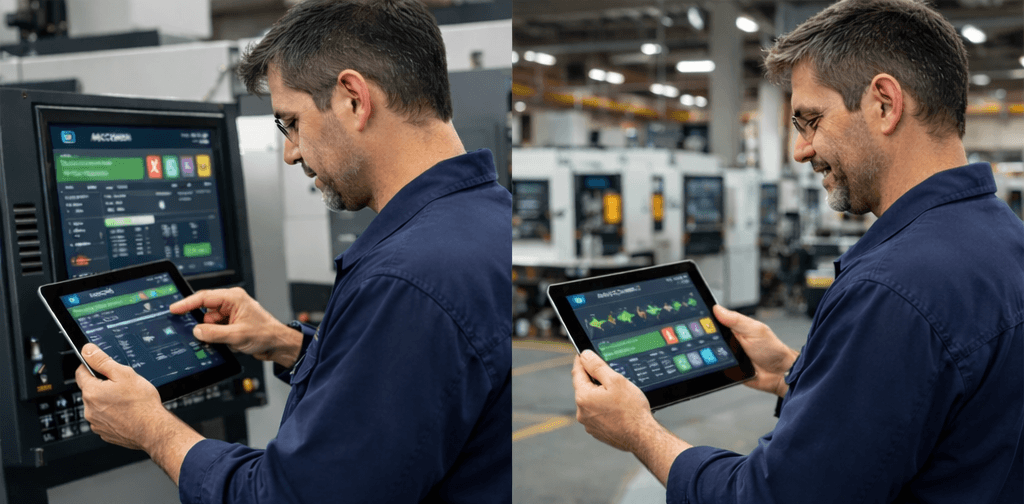
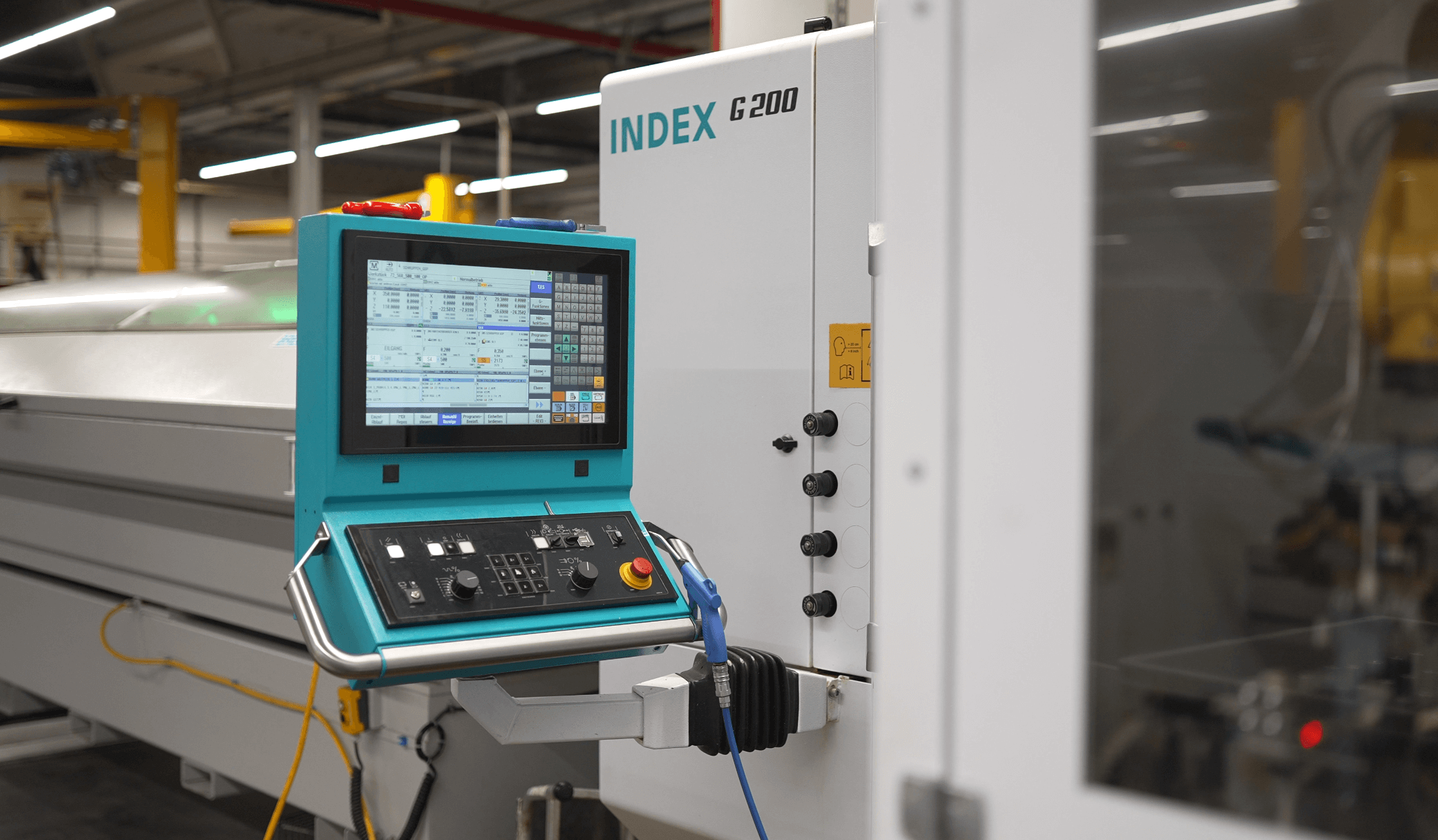
Novo AI in Real Manufacturing Environments
Manufacturing companies trust Novo AI because the solution addresses the point where many digitalization projects struggle: the existing machine park. Instead of replacing machines or beginning with a large integration project, Novo AI makes actual machine states visible.
Companies such as Otto Männer, BlekoTec, Angstrom, Schauenburg Hose Technology, Bockmühlkabel, KUKA Romania, Sorst Streckmetall, Leibinger, Erich Uhe, Jacob Group Pipework and Karl Dungs represent very different manufacturing environments – from precision engineering and metal and sheet-metal processing to cable, hose, pipe and component manufacturing.
For these companies, theory is not enough. Machines need to run, downtime needs to be identified, idle time cannot remain invisible and production decisions require a reliable data foundation. This is exactly what Novo AI was designed for.
This practical perspective is particularly important on an Okuma alternative page. Many companies already own good machines. The question is not always whether another machine needs to be purchased. The question is often: Are we actually using the machines we already have effectively enough?
Novo AI helps companies answer this question based on actual production data.
Common Misunderstandings When Comparing Novo AI and Okuma
Misunderstanding 1: Novo AI Is an Alternative to Okuma Machines
No. Novo AI does not replace an Okuma machine. Novo AI is an alternative when the requirement involves production monitoring, machine data, OEE, downtime and idle-time transparency for existing machines.
Misunderstanding 2: New Machines Automatically Solve Transparency Problems
New machines can provide modern data. However, operational transparency only emerges when that data is interpreted correctly, connected with production orders and used on the shop floor.
Misunderstanding 3: Manufacturer Monitoring Is Enough for Every Machine Park
Manufacturer monitoring can work very well when the machine park is suitable. In mixed Brownfield environments, however, a manufacturer-independent solution is often required.
Misunderstanding 4: Machine Status Is the Same as Productive Time
A machine can be running without being productive. This is exactly why idle time, microstops and actual machine-state analysis are so important.
Misunderstanding 5: Older Machines Have to Be Replaced
Many older machines continue to manufacture reliably. The problem is often not the machine itself, but the lack of transparency. Novo AI helps make existing machines data-enabled without replacing them.
These companies trust Novo AI











FAQ: Okuma Alternative for Machine Data
Yes, but only for certain use cases. Novo AI is not an alternative to Okuma machines, OSP controls, automation solutions or service offerings. Novo AI is an alternative when the primary objective is machine data, production monitoring, OEE, downtime, idle time and microstop transparency for existing machines.
Okuma is better suited when a company requires new CNC machines, lathes, machining centers, grinding machines, automation solutions, OSP controls, Okuma Connect Plan or Okuma-specific Smart Factory solutions.
Novo AI is better suited when a company has a mixed machine park, wants to monitor machines from different manufacturers or needs to make machines transparent without straightforward PLC access.
Yes. Novo AI can typically also be used on Okuma machines when the machine generates recognizable physical signals during operation. The sensor is mounted externally and does not require direct intervention in the machine control system.
No. Novo AI can identify machine states without PLC access. The AI sensor uses signals such as vibration and acoustics to make production, idle time, downtime and microstops visible.
Yes. If a company already uses Okuma Connect Plan for certain machines, Novo AI can complement the existing setup by making other machines in a mixed machine park visible or by creating a consistent production monitoring system.
Novo AI is particularly suitable for small and mid-sized manufacturing companies with mixed machine parks. This includes companies operating Okuma machines alongside machines from other manufacturers, older equipment, limited real-time transparency, unclear downtime, idle-time problems or OEE improvement targets.
The best first step is a pilot involving a small number of relevant machines. Ideally, the company selects machines where downtime, idle time or unclear utilization is already known to be a problem. With Novo AI, these machines can be monitored quickly. The company can then use actual data to decide whether it makes sense to connect additional machines, integrate ERP data, implement Okuma Connect Plan, connect an MES or invest in new machines.
Okuma Modernizes CNC Manufacturing, Novo AI Makes Existing Machines Transparent
The decision between Okuma and Novo AI depends on the company’s starting point.
Okuma is strong when a company is looking for new CNC machine tools, lathes, machining centers, grinding machines, OSP controls, automation, Connect Plan or Okuma-related Smart Factory solutions. It is particularly relevant when the objective is to expand the company’s technical manufacturing capabilities.
Novo AI is strong when a company first needs to make actual machine states visible. The solution is particularly suitable for existing machines, older or mixed equipment, environments without straightforward PLC access, unclear downtime, idle time, microstops and missing OEE transparency.
For many mid-sized manufacturing companies, Novo AI is therefore the better first step. Not because Okuma is a poor solution, but because the most important foundation is often still missing: reliable data from the machines that are already operating today.
A company that does not know when its machines are actually producing should not immediately begin with a major machine investment or digitalization decision. It should first make what is actually happening on those machines visible.
That is exactly what Novo AI was designed to do.
Find Out Whether Novo AI Is the Better First Step Before a Machine or Connect Plan Investment
Do you operate Okuma machines or are you considering Okuma Connect Plan, but still do not know reliably what is actually happening across your entire machine park?
Then start with one simple question: Do you already know exactly when your existing machines are producing, stopped, idling or losing production time through microstops?
If this transparency is missing, Novo AI may be the faster and lower-risk first step. Start with a small number of machines, make actual machine states visible and then use real production data to decide whether new machines, Okuma Connect Plan, ERP integration, MES connectivity or further automation measures make sense.
Request a demo today and find out how Novo AI can make your existing machines transparent without PLC access.
References
Okuma Europe – Firmenprofil - Offizielle Informationen zu Okuma als Anbieter für Fertigung und Vertrieb von CNC-Werkzeugmaschinen, Drehmaschinen, Multitasking-Maschinen, Bearbeitungszentren, Schleifmaschinen, CNC-Steuerung, Automatisierungstechnik, Servomotoren und weiteren Komponenten (Zugriff am: 11.08.2026)
Okuma – Connect Plan - Informationen zu Okuma Connect Plan für Maschinenvernetzung, Visualisierung von Produktionsabläufen, Echtzeit-Updates, Factory Monitor, Maschinenwarnmeldungen, Okuma NET BOX suite-C und Einbindung von Maschinen anderer Hersteller (Zugriff am: 11.08.2026)
Okuma – Maschinen vernetzen, Daten auswerten, Potenziale und Trends erkennen - Informationen zur Vernetzung, Überwachung, Analyse und Optimierung ganzer Maschinenparks mit Connect Plan, inklusive Analyse von Maschinenstatus, Betriebs- und Alarmhistorie sowie unerwünschten Stopps (Zugriff am: 11.08.2026)
Okuma – CNC-Drehmaschinen - Informationen zu Okuma CNC-Drehmaschinen, stabilen Rahmenkonstruktionen, OSP-Steuerung, Wiederholgenauigkeit und effizienter Produktion (Zugriff am: 11.08.2026)
Okuma – CNC-Schleifmaschinen - Informationen zu Okuma Schleifmaschinen, Innen- und Außenschleifen, hoher Maß- und Formgenauigkeit, Oberflächenqualität und stabilen Schleifprozessen (Zugriff am: 11.08.2026)
Okuma – Automatisierung von Okuma - Informationen zu Okuma Automatisierung, Robotik, vernetzter Datenverarbeitung, intelligenten CNC-Maschinen und kundenspezifischen Automatisierungskonzepten (Zugriff am: 11.08.2026)
Novo AI – Maschinendaten für jeden Maschinenpark - Beispiel für herstellerunabhängige Maschinendatenerfassung mit KI-Sensor und WatchMen Plattform ohne Eingriff in die Maschinensteuerung (Zugriff am: 11.08.2026)
Novo AI – Kunden - Kundenstimmen und Praxisbeispiele zu Maschinenvernetzung, Echtzeitdaten, OEE-Steigerung, Verfügbarkeitsverbesserung und Reduktion von Energieverschwendung (Zugriff am: 11.08.2026)
Novo AI – Maschinen nachrüsten - Informationen zum Retrofit-Ansatz für bestehende Maschinenparks, Maschinendatenerfassung ohne komplexe IT-Integration und Produktivitätssteigerung (Zugriff am: 11.08.2026)
Novo AI – WatchMen Plattform - Übersicht zur WatchMen Plattform für Echtzeit-Produktionsüberwachung, Maschinendaten, Berichte, Analysen und industrielle KI-Anwendungen (Zugriff am: 11.08.2026)