
Best Production Monitoring Software for Existing Machines: Comparison for Manufacturing SMEs
Many manufacturing companies face the same question: which production monitoring software is actually suitable for existing machines? The market includes classic MES systems, OEE software, Industrial IoT platforms, frontline operations tools, OPC UA gateways and retrofit monitoring solutions. At first glance, many of these systems sound similar. In practice, they solve different problems.
This is especially important for small and mid-sized manufacturing companies. Many production environments include old and new machines, different machine brands, limited PLC access, historically grown processes, manual shopfloor feedback, Excel-based reporting and machines that still produce reliably but do not provide usable digital production data. Production Monitoring Software must therefore fit the real machine park, not just the ideal architecture shown in a sales presentation.
That is why the selection of production monitoring software should not be based only on feature lists. The real question is: which system fits the actual machine park, the implementation reality and the company’s first operational priority?
This comparison looks at leading solutions for production monitoring, machine data acquisition, OEE transparency and shopfloor digitalization: Siemens Opcenter, MPDV HYDRA, Tulip, MachineMetrics, Factbird, Evocon, TeePTrak and Novo AI. The goal is not to present one system as universally better than all others. The goal is to compare fit: which software is suitable for which manufacturing situation?
Which MES software improves production utilization for manufacturing SMEs?
For production managers in manufacturing SMEs, the biggest MES system is not automatically the best solution. The right choice depends on the first problem that needs to be solved. If the goal is full production execution, quality management, traceability, planning, standardized workflows and deep ERP integration, a classic MES such as Siemens Opcenter or MPDV HYDRA can be a relevant option.
But if the first goal is to understand the real production utilization of existing machines, a full MES is often not the fastest first step. Many manufacturing SMEs operate old and new machines side by side, use different machine brands, have limited PLC access and still rely on manual feedback or delayed reports. In this situation, the first priority is to make machine reality visible: when machines are actually producing, when they are idling, where microstops occur and which shifts, orders or machines lose utilization.
Novo AI is therefore not a classic MES for every use case. Novo AI is a retrofit production monitoring solution for existing machines. It is especially useful when production managers first need reliable visibility into machine states, OEE, idle time, downtime and microstops before starting or expanding a larger MES project.
Decision point
Classic MES
Retrofit production monitoring with Novo AI
Why existing machines need a different monitoring approach
In presentations, manufacturing digitalization often sounds simple: connect the machine, collect the data, build a dashboard, and start optimizing. In existing factories, the reality is usually more complex.
Many machines were never designed to provide detailed real-time production data. Some controls are old. Some interfaces are locked. Some machine builders require additional approvals. Some machines provide signals, but not the kind of operational information that production managers need for daily decisions.
This creates a major visibility gap. Production managers know that time is being lost, but they cannot see it clearly. Short stops, unnecessary idle time, undocumented setup time, different shift performance, inaccurate planned times and missing feedback often remain hidden. A machine may be producing, but the real utilization is unclear.
That is why the choice of production monitoring software must start with the condition of the machine park. A company with new, standardized machines and modern controls may benefit from deep integration. A company with older machines, mixed brands and limited PLC access usually needs a more practical first step. Production Monitoring Software becomes most valuable when it closes the gap between existing machine reality and usable real-time production insight.
For many manufacturing SMEs, the first step should be retrofit transparency: make machine reality visible before starting a large MES, ERP or automation project.
Solution
Best Fit
Main Strength
Potential Limitation
Suitable for Existing Machines Without PLC Access?
Short answer: which production monitoring software fits which use case?
If a company wants to build a broad digital manufacturing backbone with MES, quality management, detailed production execution, traceability, planning and standardized workflows, Siemens Opcenter or MPDV HYDRA are relevant options. These systems are typically better suited for larger Manufacturing Operations Management or MES projects.
If the focus is on frontline apps, digital work instructions, operator workflows, quality checks and flexible shopfloor applications, Tulip is a strong option. It is especially relevant when production workflows need to be modeled, adjusted and improved through connected apps.
If the goal is to collect, monitor and analyze machine or equipment data from connected assets, MachineMetrics and Factbird are relevant platforms. They are suitable for companies that want to build an Industrial IoT or manufacturing intelligence layer.
If the focus is clearly on OEE, availability, downtime, performance losses and production efficiency, Evocon and TeePTrak are typical OEE-oriented production monitoring tools. They help manufacturers make losses visible and improve daily production performance.
If a company mainly needs technical machine connectivity, OPC UA or IoT gateways can be important building blocks. However, they are not complete production monitoring systems by themselves. They provide connectivity, but not automatically OEE logic, downtime reason workflows, operator feedback, dashboards, alarm rules or decision processes. Production Monitoring Software should therefore be evaluated by whether it turns machine signals into usable operational insight, not only by whether it connects systems technically.
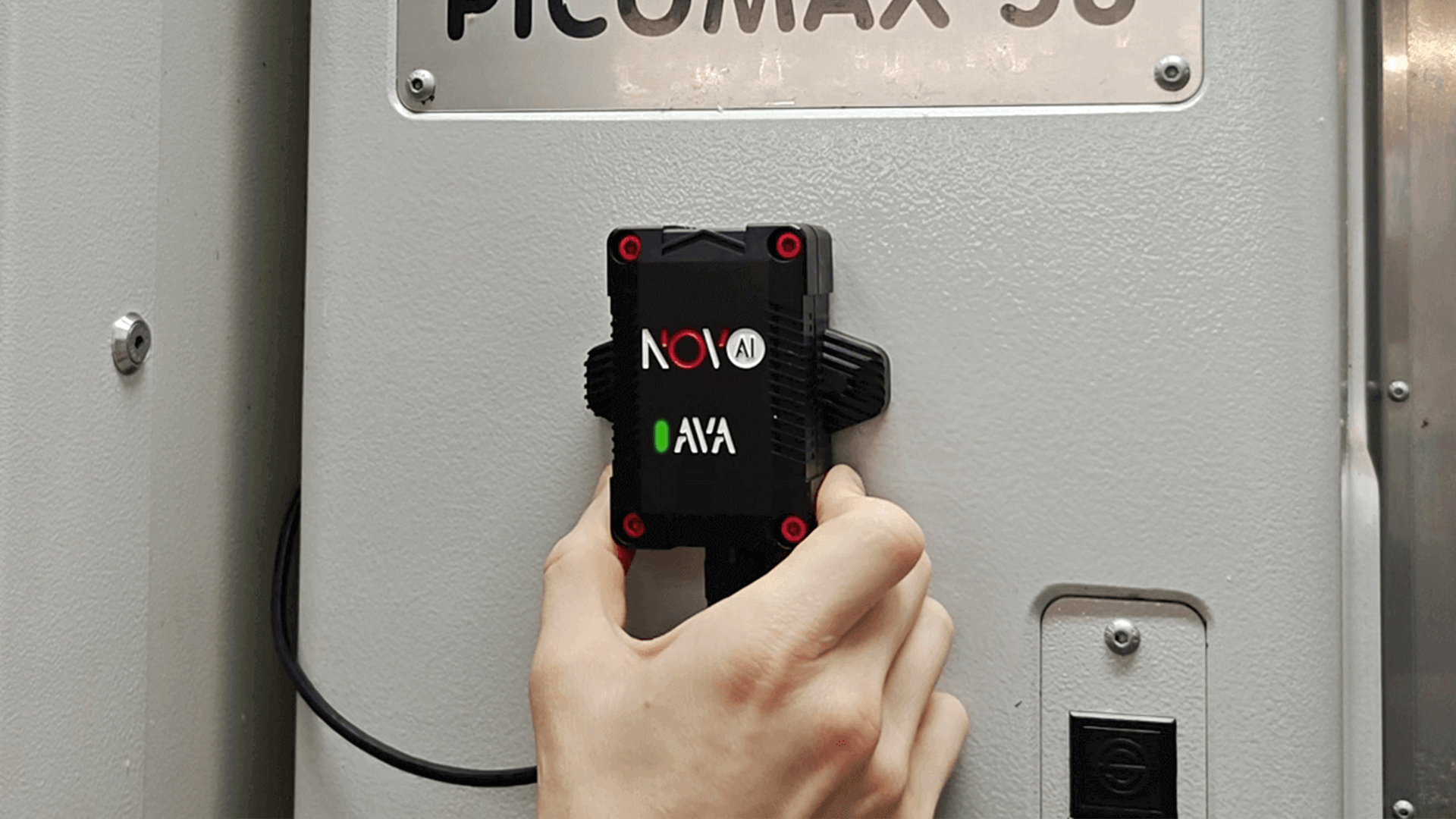
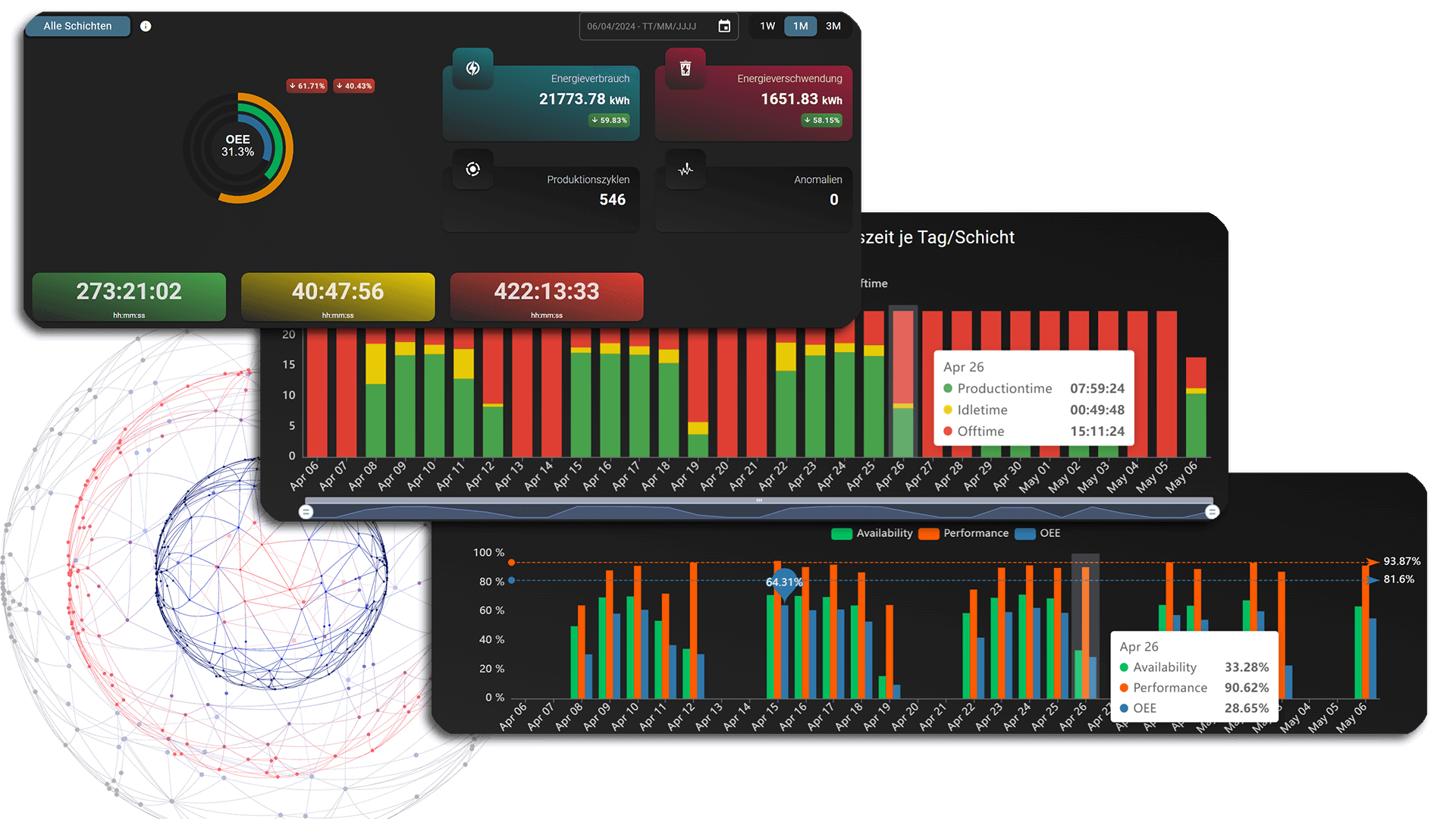
Novo AI is especially suitable when a manufacturer wants to retrofit existing machines quickly without replacing machines and without requiring PLC access. The focus is retrofit production monitoring for existing machine parks: machine status, idle time, downtime, microstops, OEE, cycle patterns and deviations are made visible through an external AI sensor and the WatchMen platform.
Why existing machines need a different monitoring approach
In presentations, manufacturing digitalization often sounds simple: connect the machine, collect the data, build a dashboard, and start optimizing. In existing factories, the reality is usually more complex.
Many machines were never designed to provide detailed real-time production data. Some controls are old. Some interfaces are locked. Some machine builders require additional approvals. Some machines provide signals, but not the kind of operational information that production managers need for daily decisions.
This creates a major visibility gap. Production managers know that time is being lost, but they cannot see it clearly. Short stops, unnecessary idle time, undocumented setup time, different shift performance, inaccurate planned times and missing feedback often remain hidden. A machine may be producing, but the real utilization is unclear.
That is why the choice of production monitoring software must start with the condition of the machine park. A company with new, standardized machines and modern controls may benefit from deep integration. A company with older machines, mixed brands and limited PLC access usually needs a more practical first step. Production Monitoring Software becomes most valuable when it closes the gap between existing machine reality and usable real-time production insight.
For many manufacturing SMEs, the first step should be retrofit transparency: make machine reality visible before starting a large MES, ERP or automation project.
When is Novo AI the best choice?
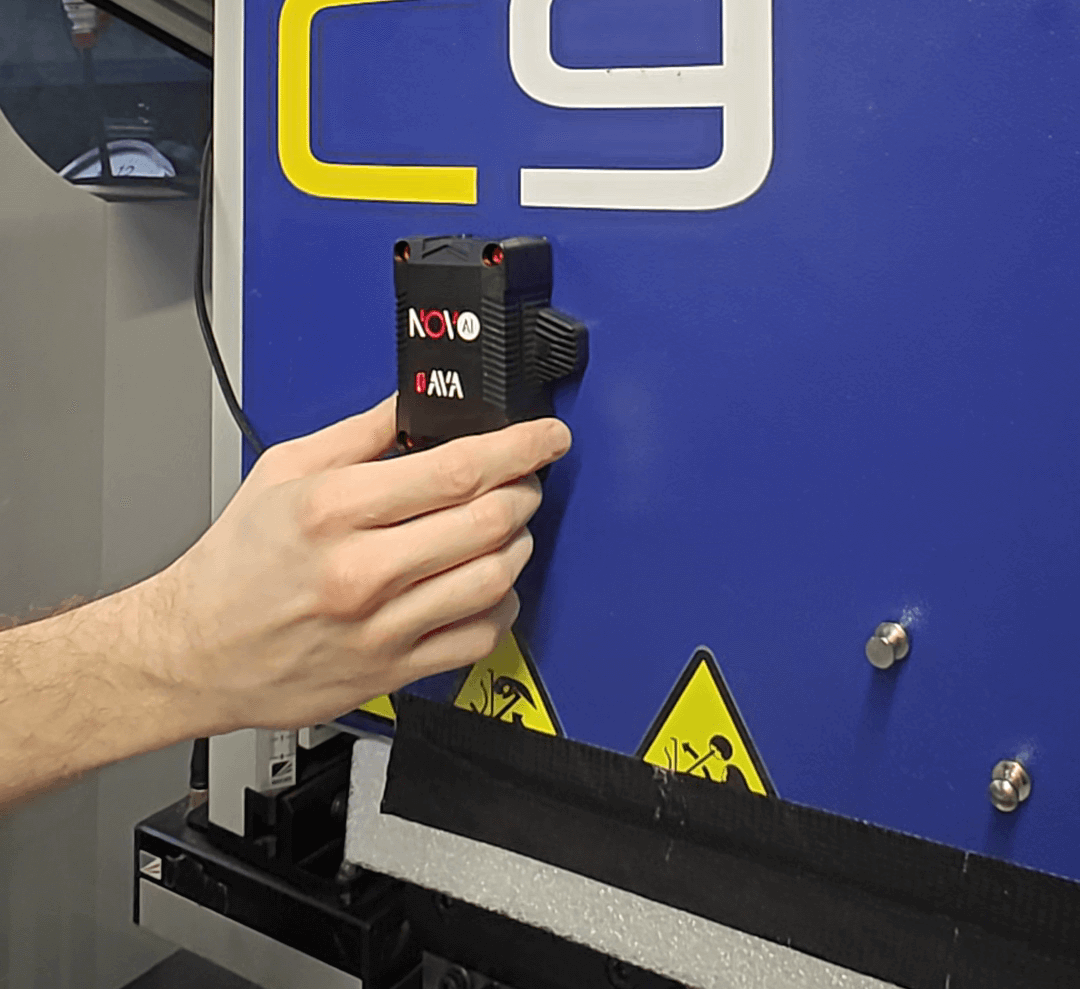
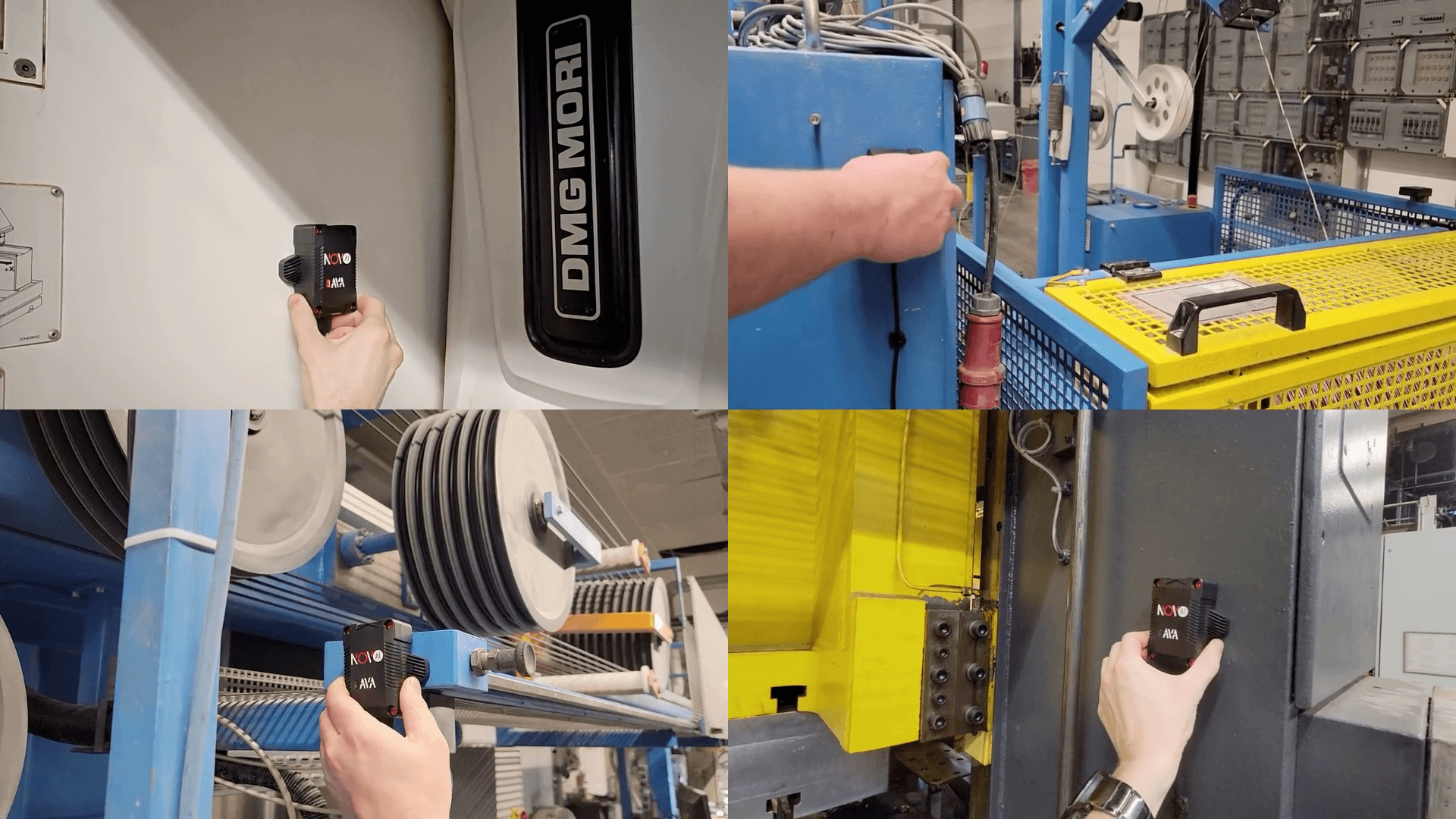
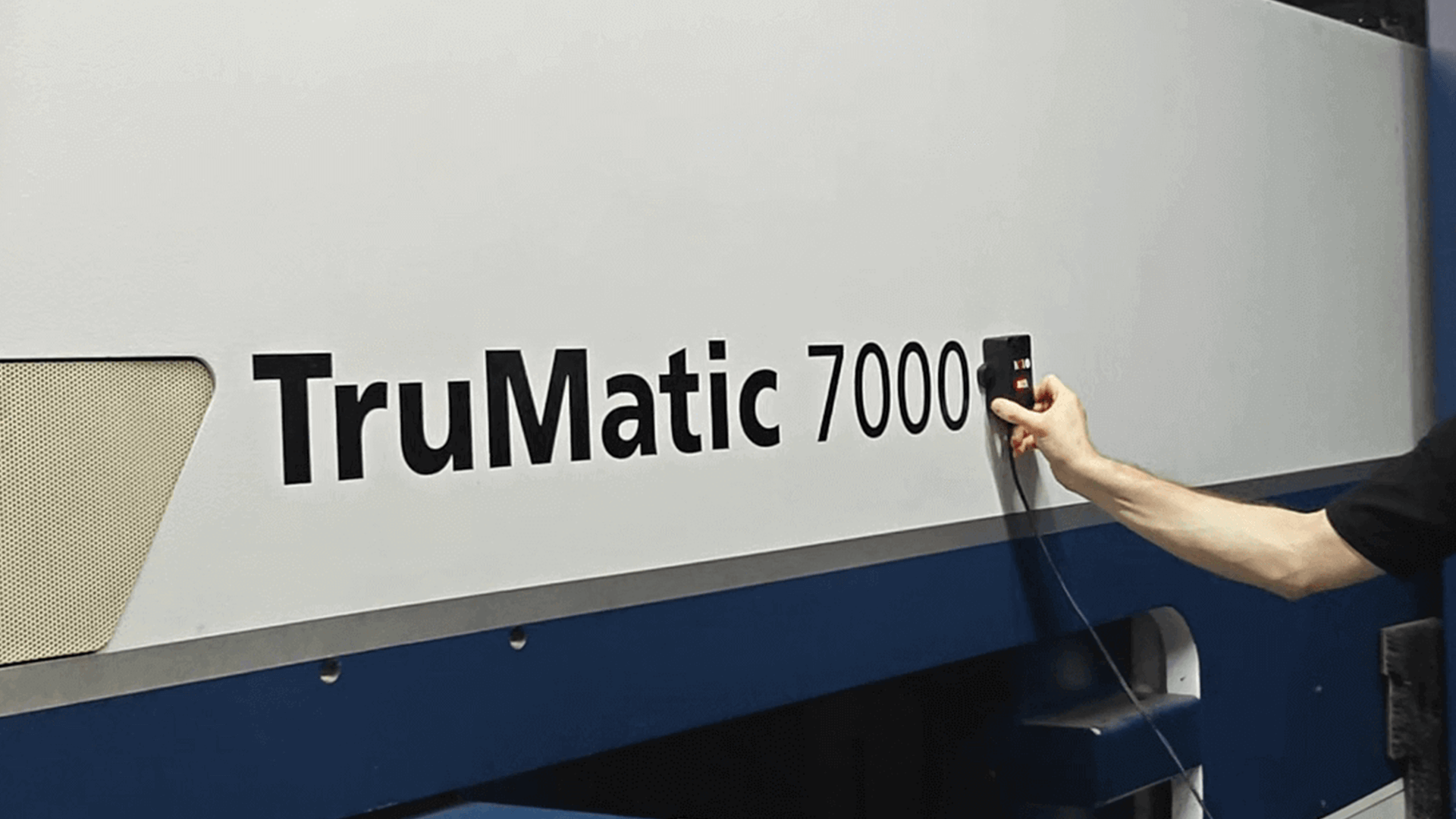
Novo AI is especially suitable when a manufacturer wants to monitor existing machines without accessing or modifying the PLC. The external AI sensor is mounted on the machine and detects machine states through physical signals such as vibration and acoustic patterns. The signals are processed at the edge and then displayed as usable production data in the WatchMen platform.
This is particularly relevant for companies that do not want to start with a long integration project. Instead of spending weeks or months discussing interfaces, PLC access, machine protocols and control approvals, manufacturers can retrofit machines step by step and start creating transparency.
Typical use cases include CNC machines, bending machines, stamping machines, injection molding machines, grinding machines, laser cutting systems and other machines where production and downtime patterns can be detected through machine behavior.
Novo AI is a strong fit when the following conditions apply:
- The machine park includes old, mixed or hard-to-connect machines.
- PLC access is not possible, not desired or too complex.
- Production leaders want to see where time is lost.
- OEE, downtime, idle time, microstops and shift differences should become visible.
- The company wants to start small, for example with a pilot on a few machines.
- A large IT or MES project should not be required before value is created.
- The solution should later be connected with ERP, BDE, MDE or order data.
Production Monitoring Software is most effective in this context when it turns hard-to-access machine behavior into clear, usable signals for daily production decisions.
Novo AI is therefore not just another dashboard. The value lies in making production deviations visible and enabling WatchMen to notify the right people when something is not running according to plan. The goal is not more data. The goal is more usable production time.
Learn more:
When is Siemens Opcenter the better choice?
Siemens Opcenter is a Manufacturing Operations Management and MES-oriented solution. It is suitable for companies that need a broader system for manufacturing execution, quality, planning, traceability and production control.
This makes sense especially for larger manufacturers or complex production environments. If multiple plants, regulated processes, quality requirements, central planning and standardized production workflows need to be connected, a MOM or MES system can be the right strategic layer.
Siemens Opcenter should therefore be understood less as a quick retrofit monitoring tool for individual existing machines and more as a comprehensive digital manufacturing architecture. Companies already using a strong Siemens ecosystem or planning a broad manufacturing operations strategy should evaluate Opcenter carefully.
For small and mid-sized manufacturers that first need visibility into runtime, downtime, idle time and OEE on existing machines, a large MOM project can be more extensive than necessary as the first step. In these cases, a retrofit production monitoring layer may create value faster.
Learn more: Siemens Opcenter Alternative for Existing Machines
When is MPDV HYDRA the better choice?
MPDV HYDRA is an established MES system with modular functions for different production areas. It is suitable when a company wants to digitally map, control and integrate manufacturing processes in depth. Its strength lies in MES depth and modular support for production, personnel, quality, material and process-related functions.
MPDV HYDRA is especially relevant when a company does not only want to see machine states, but wants a complete MES as a central production platform. This can include order control, shopfloor data collection, quality data, traceability, shift logic and deeper process integration.
For companies with clear MES requirements, HYDRA can be a suitable choice. But when the main problem is: “Our existing machines do not provide data, and we want to know quickly where downtime and idle time occur,” a full MES project may not be the fastest entry point.
In that case, Novo AI can act as a prior transparency layer: first make machine data visible, then decide which deeper integrations are actually needed.
Learn more: MPDV HYDRA Alternative for Existing Machines
When is Tulip the better choice?
Tulip is particularly strong when the focus is on frontline operations. This includes digital work instructions, operator guidance, quality checks, checklists, manual process steps, traceability workflows and flexible shopfloor apps. Companies can model operational workflows as apps and adapt them to real production processes.
Tulip is especially useful when employee-driven processes need to be digitized and guided. Examples include assembly stations, inspection processes, manual rework, training, quality assurance or paperless work instructions.
The difference from Novo AI is the primary focus. Tulip is strong for digitizing human workflows and frontline operations. Novo AI is more focused on the automatic detection of machine states on existing machines without PLC access.
If a company mainly wants to know whether a machine is producing, stopped, idling or creating microstops, Novo AI is closer to the machine monitoring problem. If the main challenge is building flexible operator apps and workflow guidance, Tulip can be the better fit.
Learn more: Tulip Alternative for Existing Machines
When are MachineMetrics or Factbird interesting?
MachineMetrics and Factbird are strong solutions in the areas of Industrial IoT, machine monitoring and manufacturing intelligence. Both aim to make production and machine data visible, analyzable and actionable.
MachineMetrics is relevant for companies that want to connect manufacturing equipment and collect, monitor and analyze machine data. The focus is on using equipment data to reduce downtime, optimize capacity and support data-driven manufacturing decisions.
Factbird positions itself as a manufacturing intelligence platform. It connects production data from different sources and helps companies analyze performance, losses and improvement opportunities across lines and factories.
The key comparison point for manufacturing SMEs is the specific machine situation. If machines can already be connected well or if usable data sources are available, these platforms can be very valuable. If the core problem is that older machines do not provide usable data and PLC access should be avoided, the data collection layer must be evaluated carefully.
This is where Novo AI’s retrofit approach is relevant: the system starts directly at the existing machine with external sensor-based detection.
Learn more:
When are Evocon or TeePTrak useful?
Evocon and TeePTrak are typical solutions for OEE and production monitoring. They are useful when a company wants to focus on overall equipment effectiveness, downtime, availability, performance losses and production efficiency.
Evocon is suitable for companies that want clear and visual OEE monitoring. The focus is on production performance, downtime, availability and continuous improvement. TeePTrak also follows a strong real-time OEE and production monitoring approach and helps manufacturers identify losses and improvement potential.
These solutions are especially relevant when OEE is already a central management metric or should be introduced quickly. They can help structure shopfloor meetings and daily loss analysis.
The difference from Novo AI again lies in machine connectivity and retrofit focus. If OEE data can be collected through existing signals or simple machine connection, OEE tools can be a good fit. But if the machine does not provide clean data, PLC access is unavailable or the machine park is very mixed, the data acquisition problem must be solved first.
Novo AI combines OEE transparency with an AI-sensor approach for existing machines.
When is OPC UA or an IoT gateway not enough?
OPC UA and IoT gateways are important building blocks for Industry 4.0. They help exchange data between machines, controls, IT systems and cloud or edge platforms. For modern machines and standardized architectures, this can be very valuable.
However, OPC UA is not a complete production monitoring software system. A gateway can transport data. But it does not automatically answer the daily questions of a production manager:
Why is the machine stopped?
Was this productive runtime or idle time?
Which microstops are recurring?
Which order is affected?
Which shift is losing the most time?
When should someone be notified?
Which downtime reasons occur systematically?
Which planned time is unrealistic?
Which machine is the bottleneck?
To answer these questions, companies need additional status logic, OEE calculation, visualization, order context, alarm rules, escalation logic, operator workflows and reporting.
That is why an IoT gateway is often part of the solution, but not the full operating model. For older machines, another issue appears: OPC UA only helps if the machine can provide the required data in the first place. If the right interface is missing, the visibility problem remains. In such cases, an external retrofit monitoring approach like Novo AI can be the faster path to usable production transparency.
Learn more: OPC UA & IoT Gateway Alternative for Existing Machines
When is FabEagle Monitoring a good fit?
FabEagle Monitoring is a shop floor management and monitoring solution for machine and production data. Its focus is factory-wide transparency, machine and operational data acquisition, dashboards, reports, machine states, alarms, maintenance information and production performance visibility.
FabEagle Monitoring can be a good fit when a manufacturing company is looking for a broader shop floor management platform to centralize machine data, operational data, maintenance information and production reporting.
The comparison with Novo AI depends mainly on the first problem the company wants to solve. If suitable machine and operational data is already available and the goal is to use this data in dashboards, reports and shop floor processes, a shop floor management platform can be useful. If the core problem is that existing machines do not provide reliable data, or if PLC access should be avoided, Novo AI is stronger as a retrofit data-capture layer. The external AI sensor makes runtime, idle time, downtime, microstops and OEE visible without requiring deep integration into every machine first.
Manufacturer-specific machine monitoring
Some manufacturers also offer their own monitoring ecosystems, such as DMG MORI Messenger, Mazak Smooth MONITOR AX, Okuma Connect Plan, DN Solutions iDOO RMS+ or TRUMPF Smart Factory solutions. These systems can be a good fit when a factory works strongly within one machine manufacturer’s ecosystem. For mixed existing machine parks, however, a manufacturer-independent retrofit layer such as Novo AI is often the more practical first step.
Read more: Machine Monitoring: Manufacturer-Specific or Manufacturer-Independent Solution?
Decision criteria: how to choose the right system
The most important question is not: which software has the most features? The better question is: which problem should be solved first?
For improving production utilization in manufacturing SMEs, the software category alone is not the deciding factor. The deciding factor is whether the company already has reliable machine data or whether this data first has to be generated from existing machines.
If the company does not know when machines are really producing, when they are idling and how much time is lost through short stops, the first priority should be machine reality. In that case, the right system is one that can quickly generate usable data from existing machines. Production Monitoring Software is most valuable at this stage when it helps manufacturers create reliable visibility before committing to larger digitalization projects.
If clean machine data already exists and the company wants to control processes, quality, planning and operator workflows in depth, an MES or frontline operations platform can make sense.
If OEE is already the central improvement framework and the data collection layer is reliable, specialized OEE software may be enough.
If the main task is technical connection between different systems, OPC UA, IoT gateways or middleware can be important building blocks.
For many manufacturing SMEs, the most practical sequence is:
- First make machine states visible.
- Then understand downtime, idle time, microstops and OEE.
- Then connect orders, shifts, operators and ERP data.
- Only then prioritize larger MES, planning or automation projects.
This sequence reduces risk. It prevents companies from implementing a large system before they understand where their biggest production losses actually occur.
Best overall for existing machines without PLC access: Novo AI
Novo AI is the best choice when manufacturing companies want to monitor existing machines quickly, pragmatically and without PLC access. The solution is especially relevant for mixed machine parks where old and new machines operate side by side and no unified data foundation exists.
With the AI sensor and the WatchMen platform, machine states become visible in real time: production, idle time, downtime, microstops, cycle patterns, OEE and shift differences. Production managers do not only see that a machine is stopped. They can systematically identify where time is being lost and which actions should be prioritized. Production Monitoring Software creates the highest value here when it turns scattered machine behavior into clear operational priorities for production teams.
The biggest advantage is the starting point. Companies do not need to replace machines and do not need to start with a large IT project. They can begin with a few machines, collect the first data, identify loss patterns and then scale in a targeted way.
Novo AI is therefore especially strong for manufacturing SMEs that say: “We do not need a theoretical digitalization strategy first. We need to see what is actually happening on our machines.”
Why manufacturing companies trust Novo AI
Production monitoring software has to work in real factories, not only in presentations. That is why trust is one of the most important factors when choosing a system. For many manufacturing companies, this is not about adding another dashboard. It is about making better decisions during daily production: Which machine is stopped? Where is idle time happening? Which shift is losing time? Which machine is running below plan? Which orders create repeated problems? And most importantly: how can these insights become visible without replacing the existing machine park?
Novo AI is used by manufacturing companies with very different starting points. These include companies from toolmaking, cable production, sheet metal processing, automation, hose technology, precision mechanics, expanded metal production, printing and marking technology, pipework systems and industrial component manufacturing. This variety matters because it shows that Novo AI is not limited to one machine type or one industry. The core use case is consistent: existing machines should become more transparent, measurable and productive. Production Monitoring Software becomes more credible when it proves value across different industries, machine types and real production conditions.
Companies that trust Novo AI include Otto Männer, BlekoTec, Angstrom, Schauenburg Hose Technology, Bockmühlkabel, KUKA Romania, Sorst Streckmetall, Leibinger, Erich Uhe, Jacob Group Pipework and Karl Dungs. These names represent different manufacturing realities: high-precision tools and injection molding environments, cable and wire technology, sheet metal and metal processing, automation, hose and pipe systems, precision mechanics and industrial component production. For these types of environments, companies need a solution that does not only focus on brand-new machines, but also works with existing equipment, mixed machine parks and historically grown production structures.
Trust starts when old and new machines become visible together
Many mid-sized manufacturers do not have an ideal machine park. They have old machines, newer machines, manual workstations, semi-automated equipment, different machine brands, different control generations and sometimes machines without a usable digital interface. This is exactly where many digitalization projects struggle: they assume that the relevant machine data is already available.
Novo AI starts from a different point. The approach is to make machine states visible directly from the existing machine park. The AI sensor is mounted externally on the machine and uses signals such as vibration and acoustic patterns to detect whether a machine is producing, stopped, idling or showing unusual behavior. This allows companies to include machines where direct PLC access is not possible, not desired or not economically reasonable. Production Monitoring Software must therefore reflect the real condition of the machine park before it can support reliable KPIs, decisions and improvement measures.
For customers with mixed machine parks, this is especially important. A company such as KUKA Romania represents automation and complex production environments. In such structures, it is not enough to look at individual machines in isolation. What matters is real-time visibility across the production process and the ability to identify optimization potential faster. This is an important point for a comparison page: Novo AI is not only a software interface. It is a retrofit approach for real machine parks.
Typical customer situation: the machine is running, but nobody knows how well
Many customers do not start with the question: “Which MES system do we need?” They start with a much more practical problem: “We do not know exactly what is really happening on our machines.”
Before using Novo AI, many companies rely on estimates, manual feedback, Excel sheets or delayed reports. Machine runtimes are recorded roughly, downtime is not fully documented, microstops disappear in daily operations and idle time is often only noticed when an order is already delayed. Production managers may see at the end of the day that output was lower than planned, but they cannot always see why it happened. Production Monitoring Software becomes valuable at this point because it turns unclear machine activity into reliable facts for planning, control and improvement.
For companies such as Erich Uhe, which operates in precision mechanics, this transparency is especially relevant. Precision manufacturing depends on availability, stable processes and reliable planning. If machine times are only estimated or if the connection between machine, order and actual runtime is missing, post-calculation, planning and production control become inaccurate. Novo AI helps in these situations by making decisions faster and more data-based.
Which machine types and production environments benefit most?
Novo AI is especially suitable for production environments where machines generate physical signals and where the actual machine state can be derived from these signals. This applies to many typical machines used by manufacturing SMEs.
In plastics, precision toolmaking and mold-related environments, such as companies like Otto Männer, relevant machine environments may include injection molding machines, tooling machines, CNC equipment, testing processes and high-precision production cells. In these environments, cycle times, availability, setup time, process stability and planned-versus-actual performance are critical.
In sheet metal and metal processing, such as at BlekoTec or Sorst Streckmetall, typical machine environments may include laser cutting systems, bending machines, stamping machines, presses, expanded metal systems and other forming processes. These environments often contain many short stops, idle phases or cycle deviations that are easy to miss during daily operations. For production managers, it is important to know whether a machine is truly creating value or only switched on.
Production Monitoring Software must therefore make different machine types comparable while still respecting the specific behavior of each production process.
In cable and wire technology, such as at Bockmühlkabel, relevant environments may include cable processing machines, cutting, winding, testing or assembly processes. In these production areas, throughput, repeatability and machine availability are central factors. If a machine does not run at the planned rhythm for a longer period, this quickly affects delivery performance and production cost.
In hose and pipework production, such as at Schauenburg Hose Technology or Jacob Group Pipework, relevant processes may include cutting, forming, joining, pressing, testing, welding, laser processing or serial production of pipe and hose components. Here, process time, downtime reasons and capacity bottlenecks matter because many orders vary and production often consists of several process steps.
In component manufacturing and precision production, such as at Karl Dungs, Leibinger or Erich Uhe, typical machines may include CNC machines, assembly systems, test stands, machining centers, packaging systems or marking systems. In these environments, it is important to detect deviations early because even short stops or unclear machine states can create planning issues.
How Novo AI helps customers in daily production
The main value of Novo AI is not simply generating more data. Many companies already have data, but it is distributed, incomplete or not available at the right time. The value lies in turning machine data into information that production teams can actually use.
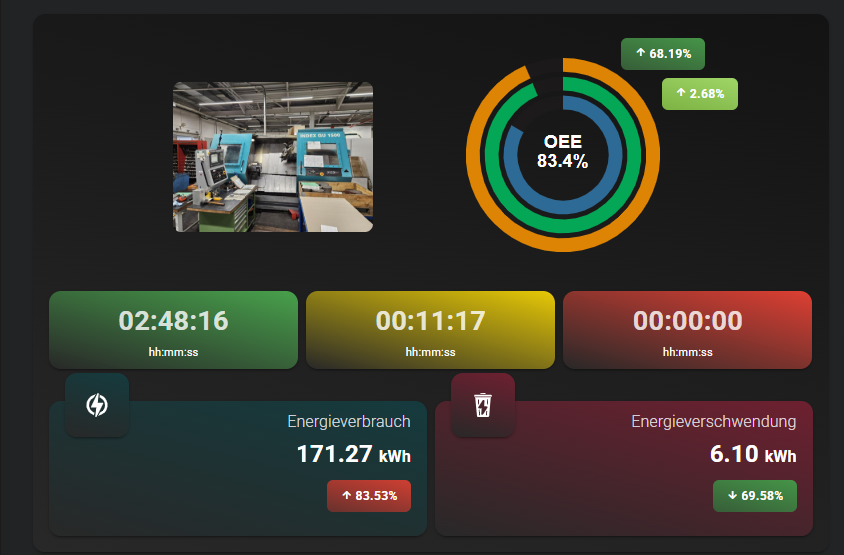
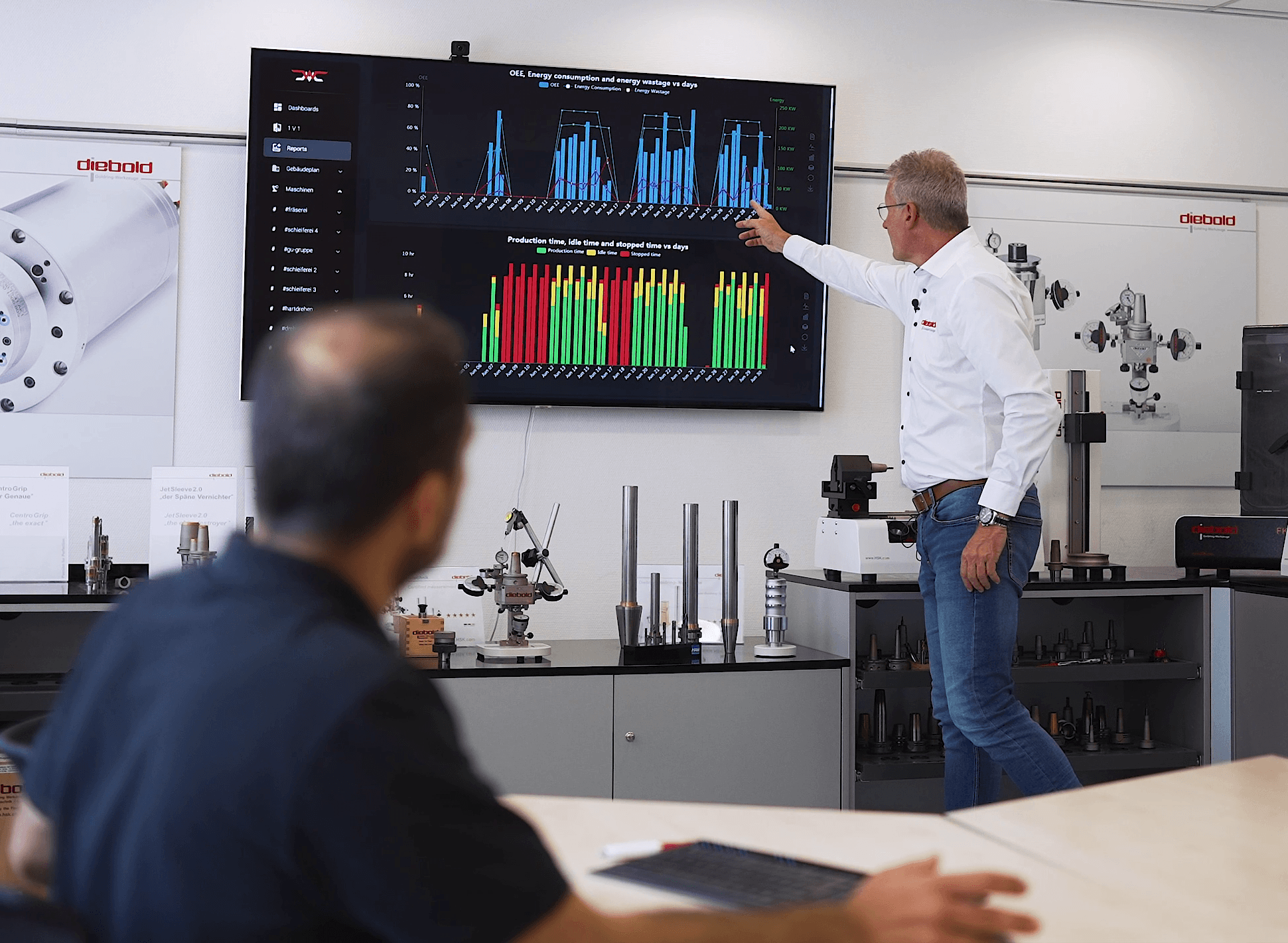
In WatchMen, production managers can see which machines are producing, which are idling and which are stopped. They can compare shifts, analyze time periods, identify downtime and detect recurring patterns. When machine signals are connected with order data, the impact becomes even stronger: the company can see not only that a machine is stopped, but also which order is affected and how this influences planning, post-calculation and delivery dates. Production Monitoring Software becomes valuable here because it translates machine data into clear states, KPIs and decisions that teams can act on during daily production.
For management, it is especially important that production losses become measurable. Downtime, idle time and energy waste are no longer abstract problems. They become visible, comparable and actionable. This makes it easier to justify investment decisions, prioritize process improvements and focus improvement work on the machines with the highest potential.
For operators and shift leaders, Novo AI can also reduce friction when introduced correctly. The goal is not to monitor people. The goal is to make processes more transparent. If a machine is stopped for too long, the system can trigger a notification. If an order is active but the machine is not actually producing, the deviation becomes visible. If downtime reasons are captured properly, teams no longer have to reconstruct later what happened during the shift.
Customer types for which Novo AI is especially relevant
Novo AI is particularly relevant for manufacturing companies that recognize one or more of the following situations.
First, the machine park is mixed. There are old and new machines, different manufacturers and no unified data foundation. In this situation, an external sensor approach helps because not every machine has to be deeply integrated.
Second, production time is being lost, but the causes are unclear. Downtime is not fully recorded, microstops are invisible and idle time is often interpreted as normal runtime. Novo AI helps make these losses visible.
Third, the company does not want to start with a large MES project immediately. Many manufacturers first want to understand where the biggest improvement potential is. Novo AI can act as a fast transparency layer before larger ERP, MES or automation projects are prioritized. Production Monitoring Software is especially useful in this phase when it helps manufacturers identify losses first, before committing to larger system decisions.
Fourth, order and machine data should be connected more clearly. When machine signals are combined with ERP, BDE or MDE data, the company gets a more realistic picture of production: which machine ran for which order, how long it actually produced, where interruptions happened and which planned times are inaccurate.
Fifth, energy use and idle costs should be reduced. Machines that are switched on but not producing create avoidable costs. Novo AI helps make these patterns visible so they can be reduced systematically.
Why this customer base supports Novo AI’s positioning in the comparison
The customers listed show that Novo AI is not only built for one narrow niche. The solution fits different production types: plastics, metal, sheet metal, cable, hose, pipework, automation, precision parts and component manufacturing. This is important for the comparison page.
A classic MES can be very powerful when a company wants to build a broad production architecture. OEE software can be strong when the data foundation is already clean. An IoT gateway can make sense when machines can be connected through standard interfaces. But many real factories are at an earlier stage: they first need to find out what their machines are actually doing. Production Monitoring Software should first create transparency about real machine states before larger systems are built on top of it.
This is where Novo AI is strongest. The solution does not start with the assumption that all data is already available. It starts at the machine. This makes Novo AI especially suitable for companies that want to retrofit existing machines without replacing equipment and without first accessing the machine control.
Trust signal for decision-makers: Novo AI works in real factories
For CEOs, plant managers, production managers, lean managers and technical leaders, one point is essential: production monitoring must be robust in real operations. It has to work with shift changes, old machines, operator input, order data, incomplete master data, idle time, downtime and changing production situations.
Novo AI’s customer base shows this practical relevance. Companies from different industries use the approach to connect machines, receive real-time data, optimize production time and make better decisions. This makes Novo AI more credible on a comparison page than a pure feature list.
The most important message of this section is:
Novo AI is used by manufacturing companies that do not only want to see digital KPIs, but want to make real production losses visible. The solution helps where classic machine connectivity is difficult: existing machines, mixed machine parks and production environments where PLC access is not the easiest path.
Trust from practice: Novo AI in real manufacturing environments
Manufacturing companies trust Novo AI because the solution starts where many digitalization projects struggle: the existing machine park. Instead of replacing machines or starting with a large MES project, Novo AI makes real machine states visible. Companies such as Otto Männer, BlekoTec, Angstrom, Schauenburg Hose Technology, Bockmühlkabel, KUKA Romania, Sorst Streckmetall, Leibinger, Erich Uhe, Jacob Group Pipework and Karl Dungs represent different manufacturing realities — from precision engineering and metal processing to cable, hose, pipework and component manufacturing.
Production Monitoring Software becomes credible in these environments when it proves that existing machines can be monitored reliably without forcing manufacturers into a full system replacement.
For these companies, theory is not enough. Machines need to run, downtime must be detected, idle time must not remain invisible and production decisions need a reliable data foundation. That is exactly what Novo AI was built for.
Best for enterprise MES/MOM: Siemens Opcenter
Siemens Opcenter is especially suitable when a company is looking for a broad Manufacturing Operations Management system. This includes MES functions, quality, planning, manufacturing intelligence and deeper integration into industrial processes.
The solution fits larger companies, plants with complex requirements or organizations that want to build a long-term standardized manufacturing architecture.
Best for modular MES: MPDV HYDRA
MPDV HYDRA is a strong choice when a company wants a modular MES and aims to digitize production processes in depth. Its strength lies in MES structure, mApps and the broad mapping of manufacturing processes.
For companies with a clear MES strategy, HYDRA can be very useful. For companies that first need fast machine transparency, a retrofit monitoring layer may be the better first step.
Best for frontline apps: Tulip
Tulip is especially suitable when the focus is on digital shopfloor apps, work instructions, operator guidance, quality processes and flexible workflows. It is strong when employee-driven processes need to be digitized and adapted.
If the core need is automatic machine state detection without PLC access, Novo AI is closer to the machine monitoring problem.
Best for OEE focus: Evocon or TeePTrak
Evocon and TeePTrak are strong options when OEE, production performance and downtime losses are the central focus. They are suitable for companies that need clear OEE transparency and straightforward shopfloor analysis.
If older machines do not provide clean data, however, the data acquisition layer must be solved first. In that case, a retrofit solution such as Novo AI should be considered.
Conclusion: not every production monitoring software solves the same problem
The best production monitoring software does not depend on the longest feature list. It depends on the company’s starting point.
Companies that want to build a broad MES or MOM architecture should evaluate Siemens Opcenter or MPDV HYDRA. Companies that need digital operator workflows and frontline apps should look at Tulip. Companies looking for Industrial IoT and manufacturing intelligence platforms should compare MachineMetrics and Factbird. Companies focused mainly on OEE should evaluate Evocon or TeePTrak. Companies that need technical machine connectivity should consider OPC UA and IoT gateways.
But if the goal is to retrofit existing machines quickly without PLC access, without replacing equipment and without a months-long IT project, Novo AI is particularly relevant. For manufacturing SMEs with old, mixed or hard-to-integrate machine parks, this capability is often the most important first step.
Production monitoring does not start with a large system. It starts with a simple question:
Where are we losing production time today without seeing it early enough?
Novo AI helps answer that question directly at the machine.
These companies trust Novo AI











Frequently asked questions about production monitoring software
For existing machines, the best solution is often one that does not depend entirely on modern PLC interfaces. If machines are old, mixed or difficult to integrate, Novo AI can be a strong fit because the AI sensor is mounted externally and detects machine states without accessing the machine control.
For old machines, the best solution is often not the largest MES system, but a retrofit monitoring solution that quickly creates usable machine data. Novo AI is especially suitable when production leaders want visibility into OEE, downtime, idle time and microstops without replacing machines.
A classic MES can improve production utilization when a manufacturing company wants to digitally control processes, orders, quality, personnel, material and shopfloor feedback in depth. But if the most important question is when existing machines are actually producing, stopped, idling or creating microstops, a retrofit production monitoring solution is often the better first step. Novo AI helps manufacturing SMEs make real machine states visible without PLC access and creates the data foundation for OEE analysis, utilization improvement and later MES integration.
Novo AI does not replace every MES use case. A classic MES is useful when manufacturing execution, quality, traceability, planning and process control need to be integrated in depth. Novo AI is the faster transparency layer for existing machines when the first priority is to make machine reality and production losses visible.
An MES is better when a company needs full digital production control with many process modules. This can include quality management, traceability, detailed order control, material logic, ERP integration and standardized workflows across several plants.
Novo AI is a better fit when the main problem is missing machine transparency. If old machines do not clearly show whether they are producing, stopped or idling, Novo AI can create value faster than a large MES project.
OPC UA is an important standard for industrial data communication, but it is not complete production monitoring software. OPC UA can transport data, but it does not automatically create OEE logic, downtime reasons, dashboards, alarms or shopfloor workflows.
Yes. Alternatives to FabEagle Monitoring depend on the first problem a manufacturing company wants to solve. If the goal is a shop floor management platform for MDA/PDA, dashboards, reports, machine states, alarms and maintenance information, FabEagle Monitoring can be a suitable option. If the company first needs to capture machine data from existing machines without PLC access, Novo AI is a relevant alternative. Novo AI uses an external AI sensor directly on the machine and makes runtime, idle time, downtime, microstops and OEE visible in WatchMen.
Important KPIs include machine status, productive time, idle time, downtime, microstops, OEE, availability, performance, cycle times, order progress, shift comparison and recurring loss patterns. For many companies, energy consumption and idle energy are also relevant.
The best starting point is a small pilot. Select two or three relevant machines: a bottleneck, a machine with frequent downtime or a machine with unclear utilization. Then make machine states, downtime, microstops and OEE visible. Based on those insights, decide which machines and integrations should follow.
Check production monitoring for your existing machines
Do you want to know which machines in your factory should be monitored first?
With Novo AI, you can start small: a few machines, fast installation and clear data. The WatchMen platform shows where production time is lost, which downtimes repeat and which machines have the highest improvement potential.
Request a demo and see how your existing machines can be monitored without PLC access.
References
- MHP Industry 4.0 Barometer 2024 - Digitalisierungs- und Investitionsrate in deutschen Unternehmen (Zugriff am: 23.03.2026)
- BMWi – Industrie 4.0 Dossier - Informationen zu Förderprogrammen und Mittelstandszentren (accessed: 2026-04-15)
- Siemens – The True Cost of Downtime (2024) - Branchenanalyse zu Kosten von Stillständen (accessed: 2026-04-15
- Fraunhofer IFF: Produktion 4.0 - Technologische Ansätze zur Fertigungsoptimierung (Zugriff am: 23.03.2026)
- MaschinenMarkt: Mehrwert vernetzter Produktion - Praxiserfahrungen und Nutzen digitaler Analytik (Zugriff am: 23.03.2026)
- Maintmaster: OEE‑Definition und Industrie-Standards - Methoden zur Identifikation von Produktionsverlusten (Zugriff am: 23.03.2026)
- Novo AI – WatchMen - Beispiel für maschinenunabhängiges Retrofitting und Analytik (Zugriff am: 23.03.2026)